If the bowl is filling and the water is not going down, stop flushing. Do not flush just to check, since each flush sends more water into the bowl. Keep flushing, and you may end up with water all over the bathroom floor. Most clogs are easy to handle yourself, and the simplest clogged toilet solutions need only a plunger. To unclog a toilet, start with a flange plunger. If the clog is small and soft, warm water and dish soap can help. When plunging does not work, a toilet auger can get farther into the toilet. If that fails too, put the tools down and call a plumber. Pushing too hard may crack the toilet, or it may shove the clog deeper into the pipe.
What Should You Do First When a Toilet Clogs?
The first step to unclog a toilet is to stop flushing and prevent the bowl from overflowing. If the bowl is almost full, lift the tank lid and push the rubber flapper down. Turning the water valve behind the toilet clockwise will also do the job. Either one stops more water from entering the bowl. Spread a few towels around the bottom of the toilet to catch any spills. Put on rubber gloves. Then wait a few minutes. Sometimes the water level drops slowly on its own.
How Do You Unclog a Toilet, Step by Step?
Step 1: Use a Flange Plunger
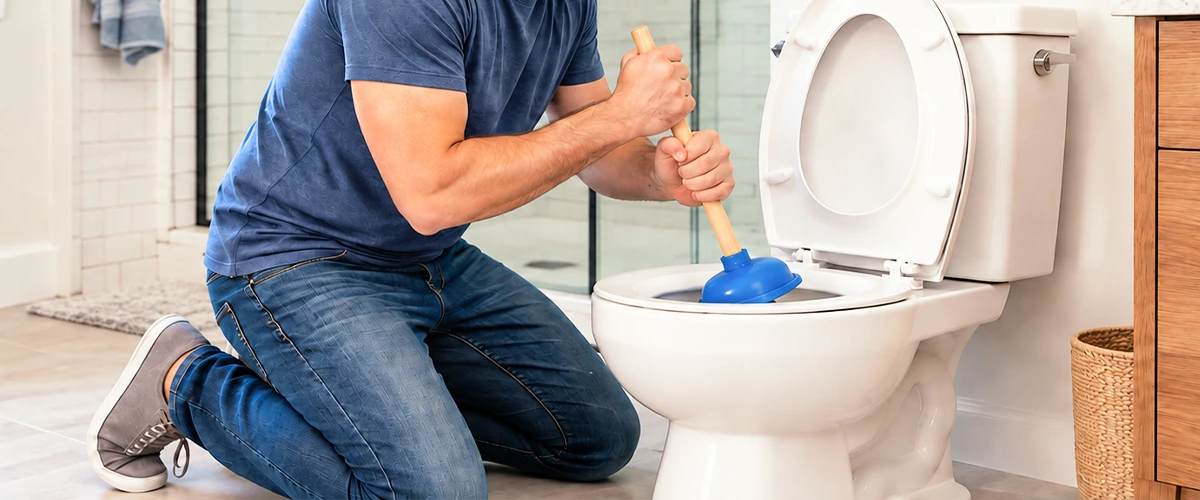
For a toilet, choose a flange plunger, because a flat sink plunger will not do the job. The flange is a soft rubber flap that folds out of the plunger cup. It fits down into the toilet drain and seals it snugly. A flat plunger cannot do that. Make sure the cup is covered with water. If there is not enough water in the bowl, add some. Push the flange into the drain opening so it seals all the way around. Give the plunger one slow, gentle push first so the trapped air can escape. Then plunge firmly for 15 to 20 seconds without breaking the seal. Finish with one hard pull up. If the water drains fast, the clog is gone. Otherwise, give it a few more rounds of plunging.
Step 2: Try Warm Water and Dish Soap
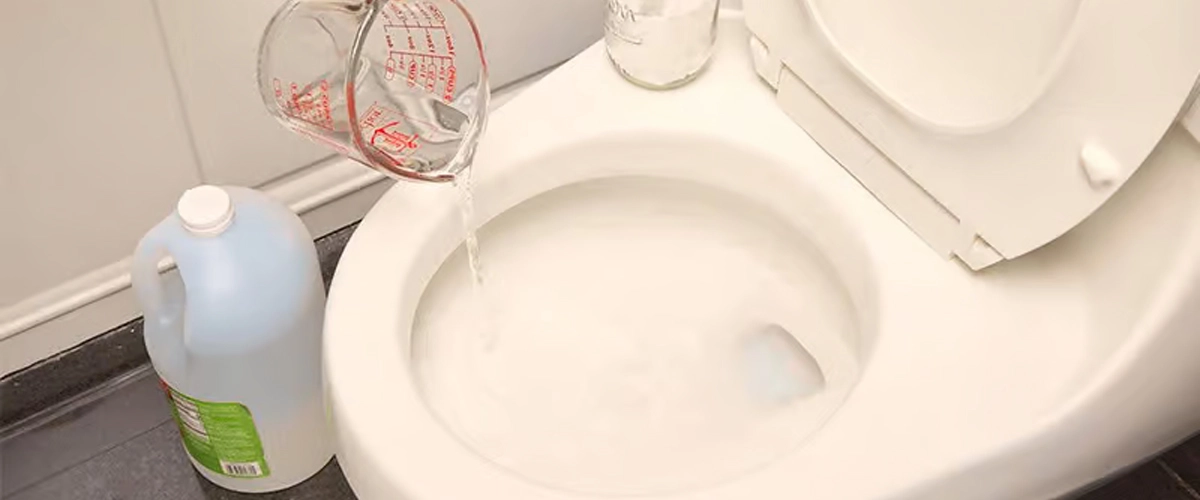
This only helps with a minor, soft clog. It is worth a try, but it is not a sure fix. Squirt a good amount of dish soap into the bowl. Fill a bucket with warm water, then pour it into the bowl from about waist height. Wait 10 to 15 minutes, then plunge again. Do not use boiling water. Sudden heat can crack the porcelain, and that costs a lot more than a clog. Dish soap is not a toilet clog remover, so do not expect it to break up a firm clog.
Step 3: When the Clog Won’t Budge, Use a Toilet Auger
If the plunger doesn’t work after a few tries, get a toilet auger. It’s a long metal cable with a flexible handle. It is called a closet auger. It reaches into the curved part of the toilet, called the trap, where most clogs sit. Feed the cable into the drain. Turn the handle slowly. When you feel resistance, keep turning to break up the clog or hook it. Once the clog breaks up, draw the cable back out and plunge again. Take your time with it, since pushing the cable too hard can scratch or even crack the bowl.
Step 4: Check Whether the Toilet Is Draining Normally
Return the bowl to the standard water level. Flush once and watch. The water should leave quickly and refill at a normal pace. If you see bubbling, slow draining, or water creeping up again, a partial blockage may still be in there. Repeat the steps with the plunger or the auger.
Is a Chemical Toilet Clog Remover a Good Idea?
Skip any harsh toilet clog remover if you can. A plunger or auger is the better first move. Harsh chemicals can splash onto your skin or eyes. Never mix two cleaning products because the fumes can be dangerous. They also do not always work. At times, they loosen the clog just briefly, or they send it deeper into the pipe. If you already poured something in, tell your plumber before they start. It keeps them safe too.
Why Your Toilet Keeps Getting Clogged?
Too much toilet paper
A big wad can pack into the trap, the curved part inside the toilet, and block the flow. Thick paper and long bundles cause this most often. Use less paper per flush, and flush twice if you need to.
Items You Should Never Flush
The EPA says to flush only toilet paper. “Flushable” wipes do not break down like paper and can clog your toilet or cause sewage backups. Paper towels, feminine hygiene products, dental floss, and cotton swabs belong in the trash.
A partial clog left behind
The water may start draining again while something still sits in the trap. The bowl looks fine, but the next flush jams on the same spot. If the drain stays slow, plunge again or use an auger.
A problem farther down the line
The blockage can be in the drain pipe instead of the toilet, though that is not always the case. If other fixtures are slow or gurgling too, the problem is likely deeper than the toilet.
How Can You Know If the Clog Is in the Toilet or the Drain Line?
It is probably just the toilet if:
- Only one toilet is acting up.
- Plunging fixes it.
- Sinks, showers, and other drains work normally.
The problem could be in the drain or sewer line if:
- Water is backing up in more than one fixture.
- Your shower or tub acts up at the same time as the toilet.
- You hear gurgling after a flush.
- The toilet keeps clogging soon after you clear it.
- Water comes up in another fixture when you flush.
More than one affected fixture is a much stronger warning than a single clog. If another fixture starts backing up, stop using water in the house. A clog like that usually needs professional toilet drain cleaning, because the blockage is too far down for a plunger or toilet auger to reach.
When DIY Clogged Toilet Solutions Are Not Enough?
Stop trying at home if:
- The toilet is still clogged after plunging and augering.
- The clog keeps coming back.
- Several drains are slow or backing up.
- Sewage is coming up.
- Something may be stuck inside, like a toy.
- Water is backing up into the shower or tub.
More force at that point can damage the toilet. A plumber can handle toilet drain cleaning with tools that reach much farther than yours.
How to Prevent Another Toilet Clog?
- Flush only toilet paper and human waste.
- Keep wipes and paper towels out of the toilet, even if the package says flushable.
- Throw away feminine hygiene products instead of flushing them.
- Skip dental floss and other small household items.
- Deal with slow drains early, before they turn into a full clog.
- Get repeat clogs checked instead of plunging the same toilet every week.
Final Thoughts
Stop flushing as soon as the water starts rising, then start with the simplest clogged toilet solutions, like a flange plunger. Start with a flange plunger, and bring out the auger if the clog stays put. Do not lean on harsh chemical cleaners. If more than one drain is acting up, or the clog keeps coming back, the problem is probably deeper than the toilet. If you have tried these steps and the water still will not go down, Parzival Plumbing can find the cause and clear it. Tell the technician what you have already tried. It saves time.