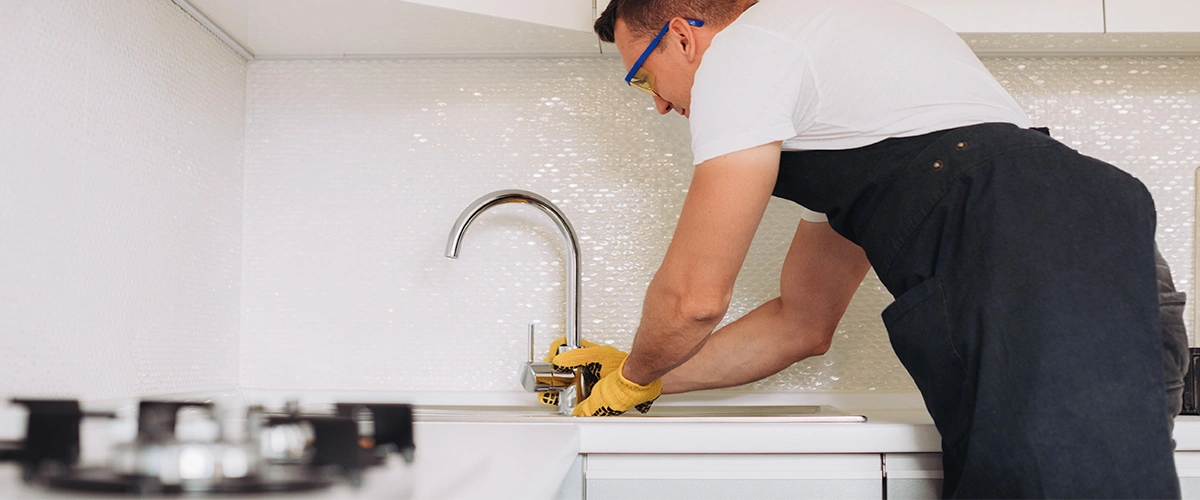
A leaky kitchen faucet can become a huge problem that can lead to higher water bills and water damage issues in the future if it’s ignored. Luckily, kitchen faucet leak repair doesn’t always require professional plumbing expertise. With a few tools and the right process, homeowners can handle minor kitchen sink faucet repair jobs themselves. But still, you may not be able to fix kitchen faucets, and you don’t need to be intimidated. Contact our team, which offers professional kitchen faucet repair services at an affordable price and is always available to assist.
How to Find the Cause Of the Leak?
No doubt, It’s important to identify where the leak is coming from. Before diving into the faucet repair, check the plumbing areas to find the leaks:
The Spout: A steady drip from the spout can cause a leak, which indicates a problem with the valve seat or washer.
The Base: O-ring components within a faucet help to prevent leaks. If you notice your kitchen faucet leaking around the base, check the O-rings and seals, as they may be worn or damaged.
The Handle: Water leakage from the handle is often caused by faulty valves. So fix it before it becomes a huge problem.
How to Perform Kitchen Faucet Leak Repair?
Follow these detailed steps for effective kitchen faucet repair to get an efficient and successful fix without any complications. Check below:
Shut off the water supply
Before starting any repair on your faucet, it’s important to shut off the water valve, which is located under the sink. This step ensures a safe and dry work area. Then, open the faucet to release any remaining water in the pipes.
Plug the sink drain
Use a sink stopper or cotton cloth to cover the drain. This ensures small parts, such as screws or washers, don’t fall into the drain during the repair.
Disassemble the faucet components
Faucets come in different types, each requiring specific steps for repair.
- Compression faucets have separate handles for hot and cold water. To fix compression faucets, first remove the decorative cap, take out the handle, and use a wrench to take off the packing nut.
- To remove the Ball faucet’s handle, you need a hex key, then lift off the cap and cam assembly.
- For cartridge faucets, you first need to take off the handle cap, unscrew the retaining nut, and carefully pull out the cartridge.
- Finally, for ceramic disk faucets, remove the handle and unscrew the ceramic disk cylinder to access the internal components.
Inspect and replace damaged parts
Effective kitchen sink faucet repair starts with checking the following components for damage. You can also ask a professional plumbing repair expert to know how to fix a leaky faucet.
- Washers and O-rings: Worn washers or O-rings are common causes of faucet leaks. You can replace them with new ones if you find any damaged parts.
- Valve Seat: Clean the valve seat with a soft brush and inspect it for damage. Replace it if necessary.
- Cartridge or Ball Assembly: If these components are cracked or damaged, replace them with compatible parts.
Reassemble the faucet components
After replacing the damaged parts, reassemble the faucet either by following your memory or with assistance from our professionals. Make sure all the components are properly aligned and properly tightened for a flawless fit.
Test the Faucet
To check that the Faucet is working properly, turn the water supply back on and test the faucet for leaks. Let the water run for a few minutes to make sure the kitchen faucet repair is successful. Tighten any loose connections if needed.
What Causes Low Water Pressure in a Kitchen Faucet?
Start by turning on other faucets in your home if you notice low water pressure in your kitchen faucet. If only the kitchen faucet has weak flow, the problem is likely with that faucet or its connections. If several faucets run weakly, the issue may be with the home’s main water supply.
Clogged Faucet Aerator
The aerator is the small screen at the tip of the spout, and sediment collects there fast. It is a common cause of low water pressure in a kitchen faucet, even after a repair. Unscrew it, rinse it, and soak it in vinegar if it looks crusty.
Mineral Deposits and Sediment Buildup
Hard water leaves calcium and lime inside faucet parts and lines. These deposits can build up over time and restrict water flow, so pressure drops slowly instead of suddenly. If the flow got weaker over months, buildup is a good suspect.
Partially Closed Shut-off Valves
The valves under the sink can get bumped or left half open after a past repair. This limits how much water reaches the faucet. Turn both the hot and cold valves fully open and see if the flow improves.
Kinked or Blocked Water Supply Lines
Flexible supply lines can bend when the cabinet gets crowded, and older ones can clog from the inside. Look for sharp kinks or bulges. Gently straighten a bent line. If it is stiff, worn, or still restricted, a plumber can replace it.
Faulty Faucet Cartridge or Spray Head
A worn cartridge may stop opening fully, and a clogged spray head can cause low water pressure in a kitchen faucet. If your kitchen faucet is leaking and the flow is weak too, suspect the cartridge. Replacing the part usually solves it. Kitchen sink faucet replacement only makes sense if the faucet is badly worn.
How to Know When Your Kitchen Faucet Needs Replacement?
Frequent Leaks Despite Multiple Repairs
If you fix one leak and another shows up a few weeks later, the faucet may be worn throughout and need a kitchen sink faucet replacement. Parts inside age at the same pace. If your kitchen faucet keeps leaking after repeated repairs, a complete faucet replacement may cost less than continuing to fix it.
Corrosion or Damage to the Faucet Body
Look closely at the faucet body, base, and spout. Green or white crust, pitting, cracks, or a flaking finish are signs of deeper wear. New seals will not help a damaged body, so repairs become less practical, and replacement is the safer option.
Unavailable or Worn Out Replacement Parts
Older or discontinued faucets can be hard to repair because compatible parts are no longer sold. If you cannot find a matching cartridge or seal, kitchen sink faucet replacement may be worth considering; a plumber can confirm whether parts are truly unavailable.
Persistent Water Flow Problem
If weak or uneven flow continues after you have checked the simple causes, the faucet may be damaged inside. Worn or corroded internal parts can restrict water. A plumber can inspect it and tell you whether kitchen sink faucet repair or kitchen sink faucet replacement makes more sense.
What mistakes should be avoided in faucet repair?
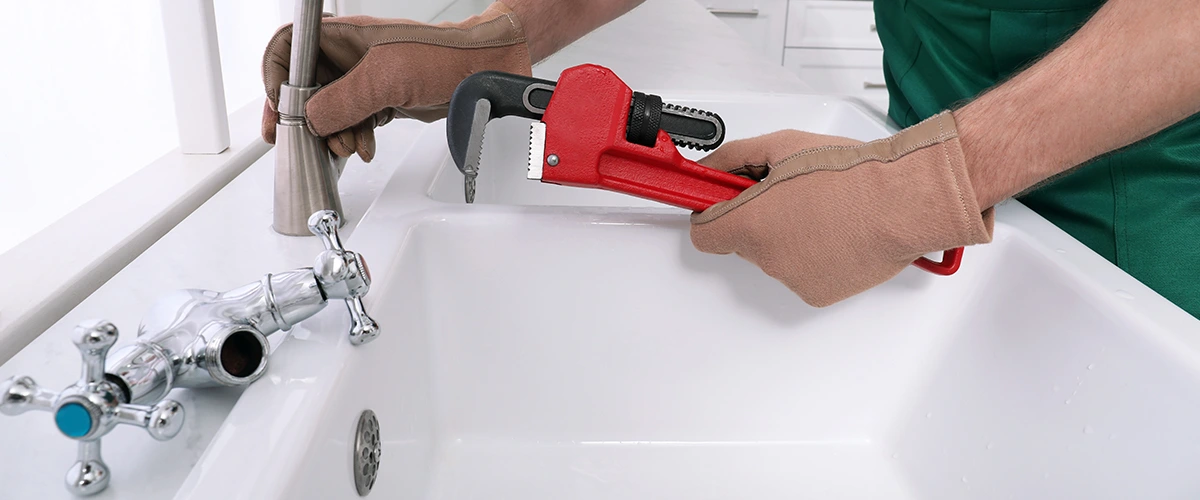
- Over-Tightening: Excessive force can damage delicate parts like washers and cartridges.
- Using the Wrong Parts: Always use the correct replacement parts to avoid compatibility issues.
- Skipping the Cleaning Step: Residue and debris can obstruct proper sealing, which leads to further leaks and creates a mess.
When to call a professional plumber?
If you are attempting a kitchen faucet leak repair by yourself and still can’t solve the issue, or if you are dealing with a more difficult problem, it is time to call in the experts. We offer reliable kitchen faucet repair and other plumbing repair services at a budget-friendly cost. Our experienced plumbers can handle any faucet issue with ease and make sure your kitchen runs smoothly again.
How to prevent future faucet leaks?
To minimize the chances of future faucet leaks, follow these tips:
- Regularly inspect and maintain your faucet.
- Avoid turning the handles too tightly.
- Use high-quality replacement parts.
Why Choose Parzival Plumbing?
Parzival Plumbing is a trusted name in Costa Mesa, CA, offering a wide range of plumbing repair services, including faucet repair and leaky faucet repair. Here’s why you should consider Parzival:
- Expertise – Our skilled plumbers are experienced in handling various types of faucets without creating any mess.
- Quick Service – We provide quick and efficient solutions to plumbing problems whether it’s faucet repair or drain cleaning.
- Affordable Pricing – Our quality service doesn’t have to come at a high cost.
- Customer Satisfaction – We prioritize customer needs and get every job done to perfection.
Conclusion
A leaky kitchen faucet might seem like a small issue, but it can lead to huge water waste and possible damage over time. But without any delay, you can tackle most faucet repair tasks yourself. If the problem persists or you prefer professional assistance, Parzival Plumbing in Costa Mesa, CA, is just a call away. Whether it’s kitchen faucet repair, dripping faucet repair, or any other plumbing repair service, we are always available to assist you.