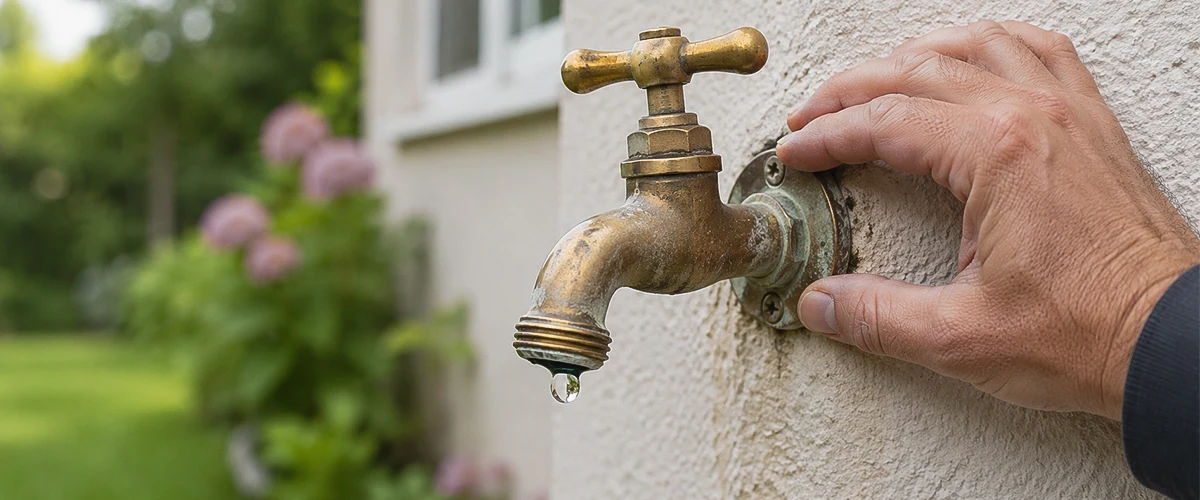
So, you’ve decided to upgrade your outdoor spigot. Maybe your current one is leaking, hard to turn, or just doesn’t look good anymore. Whatever the reason, knowing how to replace outdoor faucet spigot can help you decide whether to handle the job yourself or call a professional plumber. It can not only improve how well the water flows but also give your yard a nicer look. Before you rush out to grab your tools, though, it’s important to think about whether you can handle this job on your own or if you might need a plumber to help you out. Consider your own skills and comfort level. If you’ve done small repairs before, like fixing a faucet or changing a light bulb, you might be ready for this challenge. But if you feel uncertain about working with outdoor plumbing, it could be wise to call in a pro. Let’s take a closer look at what you need to know before diving into this project.
Understanding an Outdoor Water Spigot
Outdoor spigots, also known as frost-free spigots, are designed to prevent freezing and bursting during cold weather. They typically have a long, insulated stem that extends into the house, keeping the water supply warm.
When to Call a Plumber:
While replacing an outdoor spigot is often a DIY project, there are instances where it’s best to leave it to a professional plumber:
Complex Plumbing Systems: If your home has a complicated outdoor plumbing system, like multiple water lines running in different directions or unique setups that you’re not used to, it’s usually best to get help from a plumber. These professionals are trained to understand the ins and outs of complex systems and know how to handle them safely. They can spot potential problems that you might miss, which can save you from headaches down the road. For example, if there are special valves, unusual pipe sizes, or tricky connections involved, a plumber will know exactly how to navigate those challenges. Trying to fix it yourself in these cases could lead to bigger issues, like leaks or water damage. So, when in doubt, calling a plumber can give you peace of mind and ensure everything is done right.
Older Homes: If you live in an older home, chances are your plumbing system might be outdated or have some unique quirks. This could mean that the pipes are made from materials that aren’t used much anymore, or there might be tricky outdoor plumbing setups that aren’t standard today. In these cases, it’s a good idea to call a plumber. They can take a good look at your system and assess what needs to be done. A plumber knows how to handle older plumbing and can give you the best advice on how to proceed. They might suggest updating certain parts or even replacing the entire system, depending on what they find. Getting a professional’s input can help ensure everything is safe and functioning well, which can save you from potential problems later on.
Leaking Pipes or Water Damage: If you think there might be a leak in the water line that leads to your outdoor spigot, or if you’ve noticed signs of water damage around your home, it’s really important to call a plumber right away. Leaks can lead to bigger problems, like mold growth or structural damage, so it’s best not to wait. A plumber can help you figure out exactly where the leak is coming from and fix it before you go ahead and replace the spigot. They have the tools and experience needed to address the underlying issues properly. Fixing a leak first will ensure that your new spigot works well and lasts longer without any more problems. Taking care of leaks quickly not only saves you money in the long run but also keeps your home safe and dry.
Lack of Plumbing Experience: If you’ve never tried an outdoor shower plumbing project before, it might be a good idea to get help from a professional plumber. Tackling plumbing tasks can be tricky, and even a small mistake can lead to bigger issues, like leaks or water damage. A plumber has the skills and experience to ensure the job is done correctly and efficiently, so you don’t have to worry about potential problems later. They know the right steps to take, the tools to use, and how to handle any surprises that might come up. Getting professional help can save you time, stress, and even money in the long run. So if you’re feeling unsure, calling in a plumber is a smart choice.
Outdoor Spigot Repair vs. Replacement: What Do You Need?
Not every leak means you need a new fixture. If you notice an outdoor water spigot leaking, the cause is often a small worn part, like a washer, an O-ring, or the packing. These are quick repairs. A cracked body or a leak that keeps coming back usually calls for outdoor spigot replacement.
Problem | Possible Cause | Repair or Replacement |
Dripping spout | Worn Washer or O-ring | Repair |
Leak at handle | Worn packing or valve parts | Repair |
Cracked body | Freeze damage or age | Replace the outdoor faucet spigot |
Leak at pipe connection | Loose or damaged joints | Professional Inspection |
Keeps leaking after repair | Deeper damage | Likely replacement |
Do not replace every leaking exterior water faucet right away. A plumber can find the real problem and tell you whether a repair will do or whether water spigot replacement makes more sense.
Signs You Need Professional Outdoor Spigot Replacement
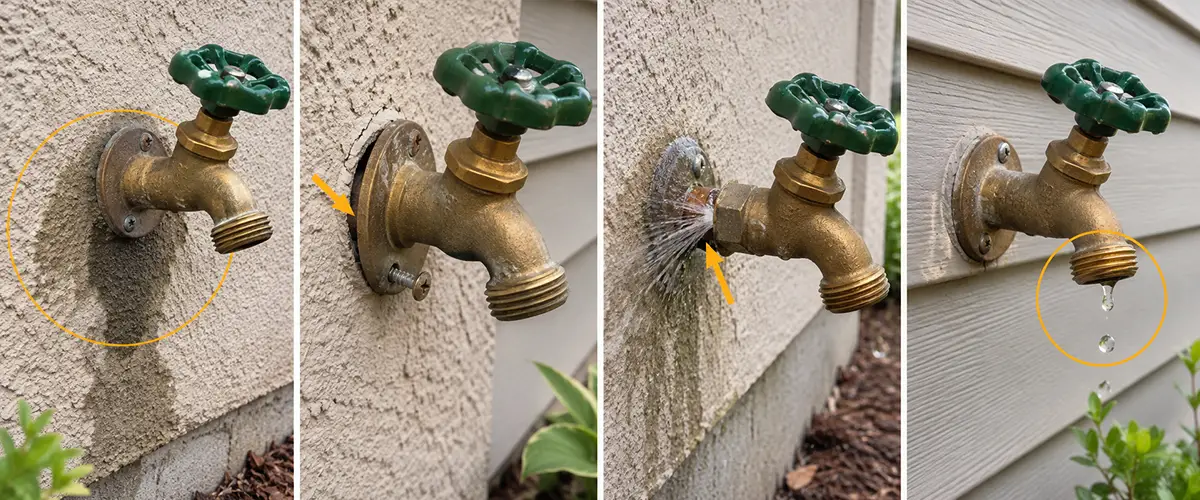
Water Behind the Wall
You may see wet siding, damp brick, or a soft, stained spot around the spigot. The cause is often a damaged pipe or connection inside the wall; water can sit there for weeks without being seen, so a plumber should check it before it harms the wall.
Spigot Pulling Away from the Wall
If the spigot wiggles or tilts when you turn it, the mounting points may be loose or broken. The pipe behind it could be stressed too. A plumber can tell if the pipe is still sound.
Water Spraying At the Pipe Connection
A spray, not a drip, usually means a loose or cracked fitting where the spigot meets the plumbing. Tightening it yourself can make things worse. A plumber has the right tools to fix it safely.
Leaks That Keep Coming Back
If your outdoor water spigot is leaking again after a fix, something deeper is likely wrong. It could be worn pipe or a bad connection. A plumber can inspect the outdoor spigot and determine whether you need a repair or complete outdoor spigot replacement.
Ignoring these signs can waste water and damage the outside of your home. A plumber can inspect your exterior water faucet and the pipe behind it, then tell you whether to replace the outdoor faucet spigot, fix the connection, or do both. In many cases, water spigot replacement is part of the answer.
How to Replace Outdoor Faucet Spigot: DIY Steps
If you feel confident in your DIY skills, here’s a general guide to replacing an outdoor spigot:
- Gather Your Tools: You’ll need an adjustable wrench, a pipe wrench, plumber’s tape, a new outdoor spigot, and a bucket to catch any water that might leak.
- Shut Off the Water Supply: Locate the main water shutoff valve and turn it off.
- Drain the Water: Open a faucet inside the house to release any remaining water pressure.
- Disconnect the Old Spigot: Use the adjustable wrench to loosen the nut that connects the old spigot to the water line. Once loose, use the pipe wrench to unscrew the spigot.
- Remove the Old Spigot: Carefully remove the old spigot from the wall.
- Prepare the New Spigot: Wrap the threads of the new spigot with plumber’s tape to create a watertight seal.
- Install the New Spigot: Screw the new spigot into the water line, using the pipe wrench to tighten it securely.
- Turn on the Water Supply: Slowly turn on the main water shutoff valve and check for leaks around the new spigot.
- Test the Spigot: Open and close the new spigot a few times to ensure it operates properly.
What Happens During Professional Outdoor Spigot Replacement?
During a water spigot replacement, a plumber checks the existing pipe, removes the damaged spigot, and installs a new one that fits the connection properly. A professional job follows a clear order. Here is what a plumber usually does.
Inspect the Spigot
The plumber looks at the fixture and finds where the problem starts. If your outdoor water spigot is leaking, they check whether the leak is at the spout, the handle, or the pipe. They also look at the visible pipe connection for cracks, rust, or wear.
Turn off the Water
The water supply is shut off before anything comes apart. This keeps water from flowing out of the open pipe while the work is going on.
Remove the Old Spigot
The plumber disconnects the fixture slowly and with care. Pulling too hard can damage the pipe. Once it is off, they check the pipe end to make sure it is in good shape for a new fixture.
Install the new Spigot
The plumber picks a replacement that fits your plumbing. How it connects depends on what you have. Some spigots screw on with threads. Others may need soldering or a different fitting. Not every job needs the same method.
Turn the Water on and Test
The plumber restores the water and tests the new exterior water faucet. They watch for drips, check each connection, and make sure the water flows well. The exact work depends on the age of your pipes and the type of connection. When a plumber handles outdoor spigot replacement, you can avoid problems like incorrect fittings or weak connections. This is often the difference between a fix that lasts and one that leaks again.
Tips for a Successful Outdoor Spigot Replacement
- Choose the Right Spigot: Consider factors like the spigot’s material, style, and flow rate when selecting a replacement.
- Insulate the Water Line: If you live in a region with harsh winters, insulate the water line leading to the outdoor spigot to prevent freezing.
- Hire a Professional for Complex Installations: If you’re installing a spigot in a difficult-to-reach location or dealing with a unique shower plumbing setup, it’s best to hire a plumber.
By following these guidelines and assessing your skills and the complexity of your outdoor plumbing system, you can determine whether replacing an outdoor spigot is a DIY project you can handle or if it’s better to leave it to a professional. Remember, a well-installed outdoor spigot can enhance your outdoor living space and provide convenience for years to come.
Final Thoughts
Not every leak means you need a new fixture. A worn washer is an easy repair, but a cracked body, a loose connection, or a leak that keeps coming back may mean it is time to replace the outdoor faucet spigot. The right choice depends on the spigot and the pipe behind it. A plumber can check both and tell you what makes sense. Parzival Plumbing serves homeowners across Orange County. If you need help with outdoor spigot replacement or any other plumbing issue, give us a call.