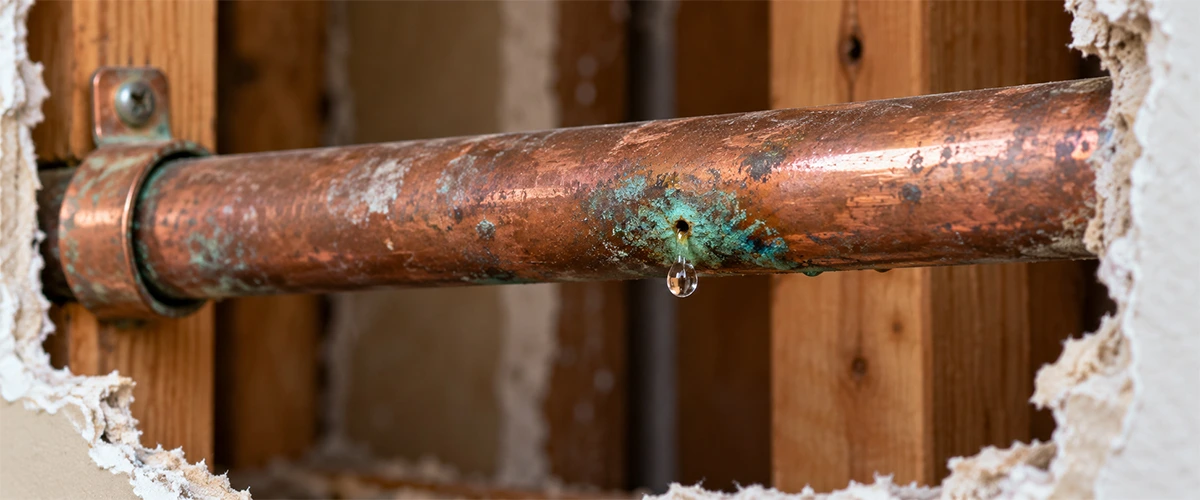
You notice a small damp spot on a wall, or a faint stain on the ceiling that was not there last month. Maybe your water bill went up, and nobody can say why. A pinhole leak in copper pipe is often behind problems like these, and it can stay hidden for a long time. The tricky part is that one tiny leak may point to a bigger issue. The same water, pipe age, and operating conditions that wore down one spot may be affecting others. So the real question is not only how to fix this leak. It is whether to repair the affected section or look at whole-house repiping.
How Does a Pinhole Leak in Copper Pipe Start?
A pinhole leak is a very small hole in the wall of the pipe. It can be too small to see, yet water under pressure still finds its way out. Pinhole leaks in copper pipes often start on the inside of the pipe, so damage can build quietly before anything shows on the surface. Most supply lines run inside walls, ceilings, and under floors. This means if there is any leak in the copper water lines, it will go unnoticed for weeks or even months. Some common warning signs are:
- Wall stain or dampness
- Peeling paint or bubbling drywall
- Strange or Musty odors
- Spike in the water bill
- Reduced water pressure in some cases
If you notice any sign discussed above, don’t wait and call a plumber for hidden leak detection. A trained plumber can locate the source without opening more of the wall than necessary.
Why Do Copper Pipes Develop Pinhole Leaks?
Copper pipe corrosion rarely has a single cause. Several conditions can work together, and only an inspection can show which ones apply to your home.
Water Chemistry
Water chemistry can affect how quickly your pipe is damaged. This includes pH, minerals dissolved in the water and other things.
Pipe Age
Older systems have years of daily use, so internal wear and corrosion may have developed over time.
Water Flow and Turbulence
Rough or fast flow in certain spots can wear away the pipe wall in a small area. Plumbers call this erosion-corrosion.
Installation and System Design
Some fitting, layout, or workmanship issues can lead to early pipe damage. Hard water alone does not explain every pinhole leak, and no single cause is certain until a plumber looks at the pipes. Still, this is why one leak can mean more than one bad spot. If the water, the age, and the operating conditions affected one section, other parts of aging water pipes may be under the same stress. A pinhole leak in copper pipe can be an early sign worth taking seriously.
What Pipes Are Usually Found in Older Orange County Homes?
The material in your walls depends on when the home was built and what upgrades came later. Your own home may not follow these patterns exactly.
Older Homes
Some of the oldest homes may have galvanized steel plumbing, depending on the original construction and later renovations.
Homes built through the 1970s and 1980s
Copper piping was widely used in residential plumbing during these decades.
Home Built Between 1978 and 1995
Some homes may contain polybutylene piping. The dates are approximate, and the material may have been installed or replaced at different times.
Many homes also have a mix of materials after remodels or partial repairs. That is why identifying the actual pipe material matters before you decide on repairs or replacement. A fix that suits copper may not suit another material. Knowing what you have also helps when planning copper pipe replacement or repiping older homes.
If you suspect polybutylene, our guide to polybutylene pipes explains how to identify it and what to watch for.
Should You Repair a Pinhole Leak in Copper Pipe or Consider Repiping?
This is the main decision for most homeowners. The right answer depends on the condition of the pipes and the plumbing history of the home, the number of leaks, and a professional inspection. One pinhole leak does not automatically mean the whole system must be replaced. A localized repair may be reasonable when:
- The leak is the first known problem.
- The surrounding pipes appear to be in good condition.
- The home has no history of repeated leaks.
- A plumber checks the area and finds the damage stays in one spot.
Copper pipe replacement or whole house repiping may be worth considering when:
- Multiple pinhole leaks have developed.
- Leaks keep coming back in different areas of the house.
- Corrosion has spread across many parts of the plumbing, not just one area.
- You keep paying for repairs, and the water damage keeps coming back.
- The system is aging, and an inspection reveals broader problems.
Whole house repiping means replacing the home’s plumbing supply pipes, and the scope depends on the system and the property. Before recommending anything, a plumber can review the existing pipes, the repair history, how easy the pipes are to reach, and the replacement options. Repiping will not remove every possible plumbing problem, and it is not always cheaper than repairs. It is a choice to weigh against the cost of repeated patches.
What Should You Do If You Suspect a Hidden Copper Pipe Leak?
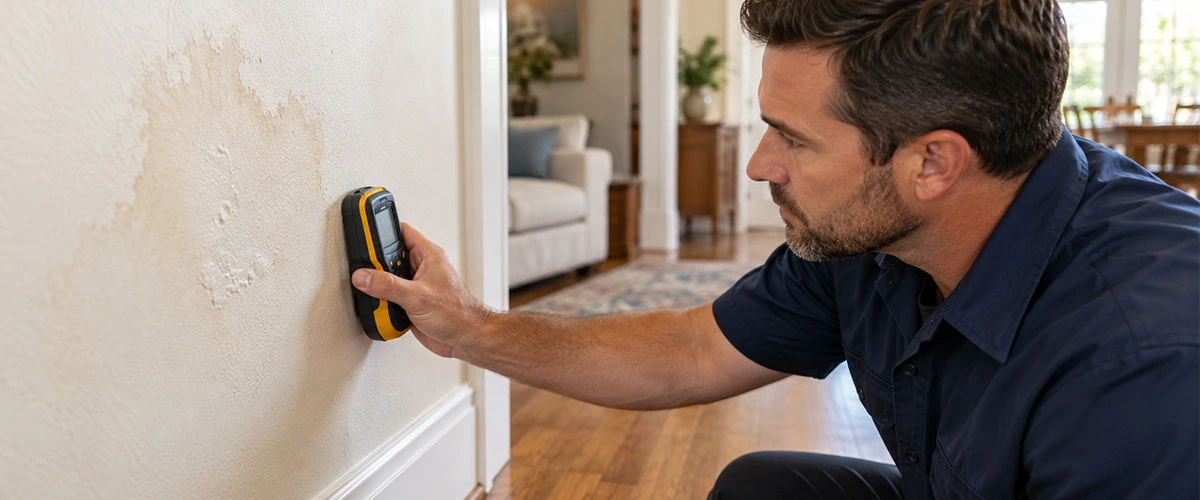
A leak you can’t see can still be doing damage, so check it out soon. Start with these steps:
- Walk through the house and note any brown stains, damp drywall, or floor that feels spongy.
- When water is still running, close the main valve. Only do it if you can reach it without risk.
- Don’t cut into drywall to hunt for the leak. You can end up with a bigger repair and still miss the source.
Contact a certified plumber for hidden leak detection and an assessment of the affected piping. Ask whether the damage looks isolated or whether the rest of the plumbing system should be inspected. Hidden water leak repair works best when the source is found first. A plumber for hidden leak problems can use the right tools to trace it, then explain whether a spot repair is enough.
Final Thoughts
A pinhole leak in copper pipe deserves attention because other sections of the plumbing may have similar weak spots. Patching one spot and hoping for the best can leave the underlying problem in place. The better move is to assess the system as a whole, then decide between a targeted repair and whole house repiping. If you have found a leak, or you simply want a clear picture of your pipes, call Parzival Plumbing at 949.229.7550 or request service online. Our team will inspect your plumbing and walk you through your options.