Many Costa Mesa homes built between the late 1970s and mid-1990s still have a type of piping that most owners have never looked at. Polybutylene pipe is flexible plastic piping, often gray, that builders used widely during those years. Some of it may still run through your walls or crawl space. Plenty of owners never check, and that is a risk because old pipes wear out quietly. In this blog, you will learn how to spot polybutylene, why plumbers worry about it, and when repair or replacement makes sense.
What is Polybutylene Pipe?
It is a bendable plastic tube that carries water to the fixtures in a home. Gray is the shade you will run into most often. Builders liked it for good reasons. It was cheap, light, and easy to turn around corners without many fittings. From the late 1970s to the mid-1990s, it was used in a lot of new homes, usually as the supply lines to sinks, toilets, and the water heater. Nobody thought about replacing them when the trend faded. The pipes stayed where they were, so an older home can still have polybutylene plumbing today, sometimes without the owner knowing.
Why Is Polybutylene Pipe a Concern?
Age is the main problem. Treated water from most city taps can slowly damage the pipe. Installation and other conditions play a part too. Over the years, the material can lose strength. A weakened pipe may crack or start to leak. The trouble is where these lines run. Supply pipes sit inside walls, ceilings, and floors, so a slow drip can go on for months. You might not notice until a stain shows up. This doesn’t mean every plumbing line will fail, but you should still have the plumbing checked once. Problems associated with deteriorating polybutylene plumbing can include:
- Cracks or leaks
- Hidden water damage
- Damage behind walls or ceilings
- Unexpected plumbing repairs
- Moisture-related property damage
How Can You Identify Polybutylene Pipes?
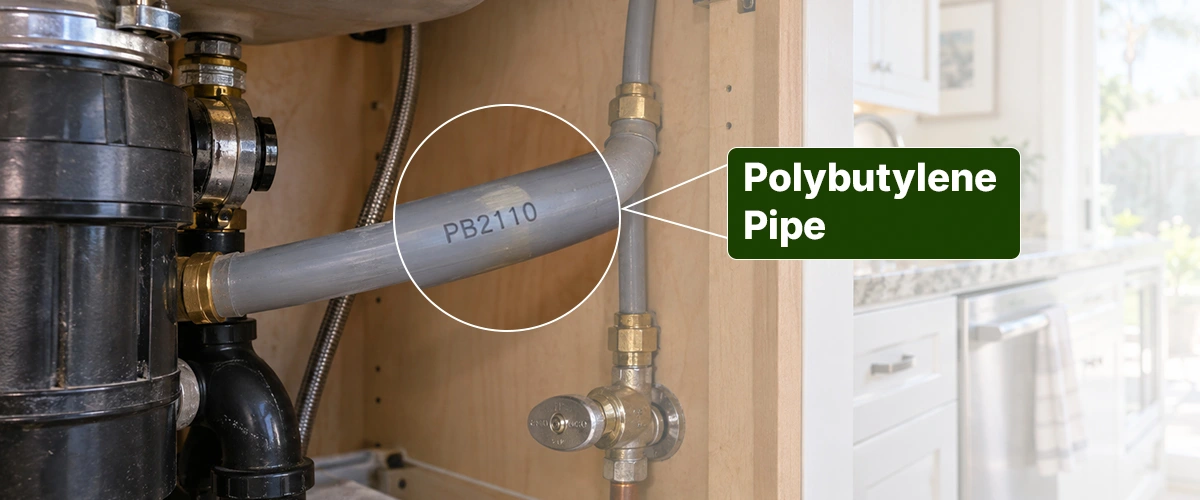
Grab a flashlight and check the pipes you can reach easily. Watch for these clues:
Color
Gray or another light shade is common.
Material
Flexible plastic, not stiff like copper.
Marking
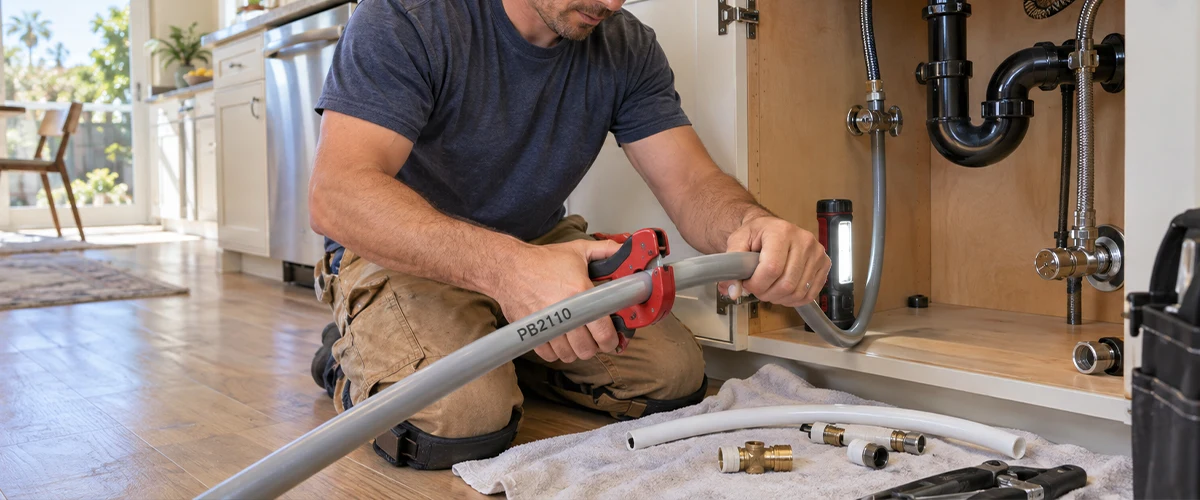
“PB2110” is often printed along the pipe.
Location
Under sinks, near the water heater, in utility areas, and in other open plumbing spaces.
Don’t rely on color alone. Other pipes can look alike, and print can fade or hide behind a fitting. A plumber can confirm the material and check how the lines are holding up. If you have tried yourself and are still confused, contact Parzival Plumbing. Our plumbers provide same-day plumbing services in Orange County.
Should You Repair or Replace Polybutylene Pipes?
A repair handles one problem. If a fitting drips or a pipe cracks, a plumber can fix that spot. The rest of the polybutylene stays in place. Replacement goes further. When homeowners replace polybutylene pipes, the old lines come out, and new ones go in.
Repair | Replacement |
Addresses a specific damaged section | Replaces existing polybutylene plumbing |
May address an immediate leak | Addresses aging plumbing more broadly |
Does not replace unaffected sections | Can involve replacing larger portions of the system |
May be appropriate for a localized issue | May be considered when polybutylene is widespread or deteriorating |
Have a plumber look over the whole system before you commit to either route. The findings of the plumber shape the scope of the work. Replacement is not always the right solution.
What Is Involved in Polybutylene Plumbing Replacement?
Every home is a little different, but polybutylene plumbing replacement usually moves in this order:
- Inspect the plumbing
- Identify the polybutylene lines
- Determine the replacement scope
- Plan access to the existing piping
- Install the new plumbing
- Reconnect fixtures
- Test the system for leaks
The rest of the work that adds up depends on the layout and access. Pipes in an open crawl space are easier to reach than lines behind finished walls. If you decide to replace polybutylene pipes, ask the plumber to walk you through the scope first. We provide a free second opinion. Do not hesitate to ask for an opinion. Our experts can guide you through the options that are suitable for your home.
How Much Does It Cost to Replace Polybutylene Pipes?
There is no single price. The cost of polybutylene plumbing replacement changes with the home. A small one-bath home with open access is a very different job than a two-story home with tight walls. Factors that can affect the cost include:
- Home size
- Number of bathrooms and fixtures
- Amount of polybutylene piping
- Pipe accessibility
- Replacement material
- Labor
- Wall or ceiling access
- Related repairs or permits, where applicable
A generic price range would not help you much. An inspection and project assessment give you a truer estimate, because the plumber can see the pipes and figure out how to reach them.
What Can Replace Polybutylene Pipes?
Three materials come up most often when homeowners think about polybutylene pipe replacement. Each material has strengths and limits worth knowing.
Replacement Material | General Characteristics |
PEX | Bends easily and is widely used for home water lines |
Copper | Durable, rigid, and long-established in residential plumbing |
CPVC | Plastic piping used for residential hot and cold water |
Which one fits for residential plumbing depends on your home’s layout, how easy the pipes are to reach, and the system you already have. No material wins in every house, so ask your plumber why they would pick one for yours.
Final Thoughts
If you are wondering “what is polybutylene pipe”, now you have the answer. It is flexible plastic piping that older homes may still have. It can crack or leak with age, often where you can’t see it. Gray tubing marked PB2110 is a clue, but only an inspection confirms the material and its condition. After that, you can decide whether a repair is needed or a replacement. Many homes don’t need a full job. The cost to replace polybutylene pipes depends on your layout. PEX, copper, and CPVC are the usual materials for replacement. Parzival Plumbing helps Costa Mesa homeowners inspect their pipes and replace polybutylene plumbing when the situation calls for it.