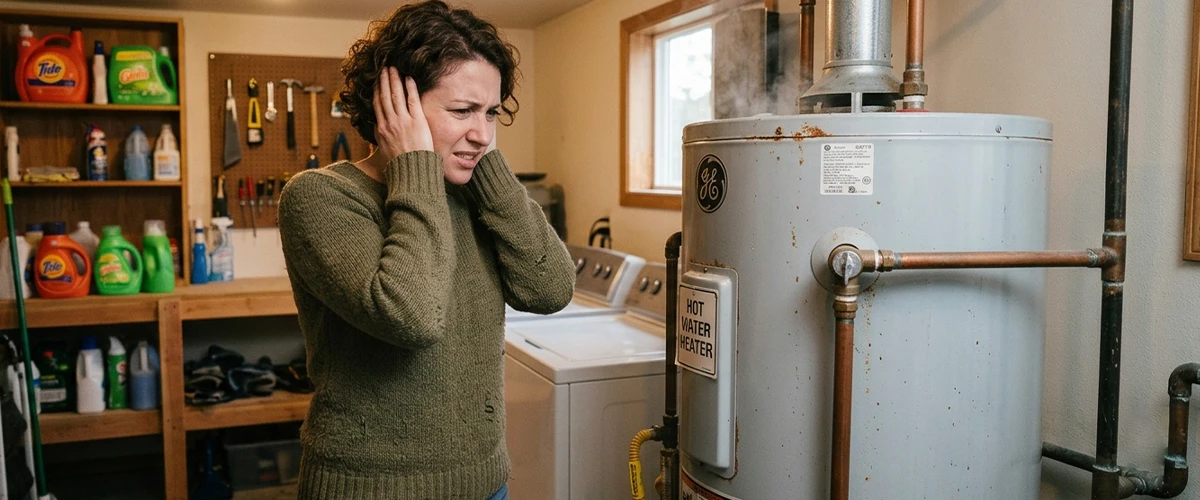
If your water heater is popping, crackling, or rumbling, sediment buildup is usually the reason. Loose plumbing, a failing heating element, or normal expansion can cause it too. A water heater making noise does not mean it is about to fail. But it also is not something to ignore for months. Here is what is actually happening inside the tank. In this blog, we will cover which sounds are normal and which ones mean it is time to call someone.
Why Is My Water Heater Making a Popping Noise?
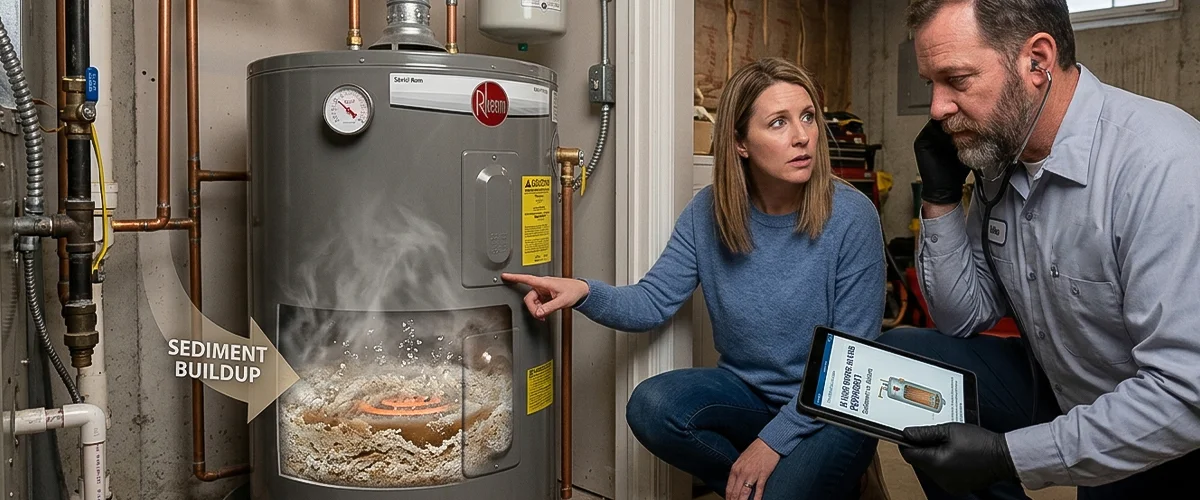
Most of the time, a water heater making popping noise comes down to sediment at the bottom of the tank. This mainly applies to tank-style water heaters, not tankless units. Your water carries minerals like calcium and magnesium. That material does not disappear. It settles at the bottom of the tank. Over months or years, it builds up in layers. Most homeowners never notice until it starts causing problems.
Once enough sediment collects, water gets trapped underneath it. The burner heats the tank. That trapped water turns to steam faster than the water around it. The steam pushes its way out through the sediment layer. That is the popping sound you are hearing. Sediment is not the only cause, though. A few other things can create similar noises.
Common Causes of a Noisy Water Heater
Sediment Buildup
Sediment buildup is one of the common causes. It gets worse the longer a tank goes without a flush. That describes most water heaters in most homes.
Mineral Deposits
Homes with hard water deal with this more. Parts of Orange County have harder water than average. Minerals collect on the inside of the tank and around the heating elements.
Heating Element Problems
This applies to electric water heaters. Deposits can build up directly on the heating element. When a water heater making crackling noise heats up, that creates a sizzling or crackling sound.
Water Pressure or Plumbing Issues
Sometimes the tank itself is not the source. Loose pipe fittings can create noise. High water pressure can, too. The sound may seem like it is coming from the water heater, but it is actually coming from the connected plumbing.
Normal Expansion & Contraction
Metal expands when heated. It contracts when it cools. This can cause light ticking or clicking in the tank and pipes. A quiet, consistent sound like this usually is not a concern.
What Does a Popping, Crackling, or Rumbling Sound Mean?
Different sounds usually point to different causes. But the sound alone can’t confirm exactly what is wrong. Here is a general guide.
| Sound | Possible Cause | What It May Mean |
| Popping | Sediment buildup | Water may be trapped under deposits |
| Crackling | Sediment or heating element deposits | Common in electric water heaters |
| Rumbling | Heavy sediment buildup | May indicate the tank needs attention |
| Ticking | Pipe expansion or contraction | Often less concerning |
| Hissing | Heating or pressure related issue | May need inspection |
Is a Water Heater Making Noise Dangerous?
On its own, no. Many water heaters make this noise for a long time before anyone addresses it. It becomes more serious when the noise shows up along with other signs. Watch for:
- Water leaking around the base of the tank
- Rust or corrosion on the unit
- A gas smell near the heater
- Water that is noticeably hotter than usual
- A pressure relief valve that is leaking or damaged
- A burning smell
- The unit shutting off repeatedly
- A sudden loss of hot water
If you smell gas, treat it as an emergency. Shut off the gas supply if you can. Leave the area right away. Call your gas company or a plumber from Parzival Plumbing immediately. This is not something to handle yourself. We provide 24/7 emergency plumbing services. A popping water heater is not an emergency. It is still worth addressing soon.
Can You Fix a Noisy Water Heater Yourself?
It depends on the cause. Start by checking a few things on your own. Check where the sound is coming from, the tank or a pipe. Look around the base for leaks. Has the water felt hotter lately? Notice if the noise only happens while heating, or at random.
Flushing the tank can clear out sediment and reduce the noise. This works for many cases. But it is not the right approach for every situation. Older tanks can develop new problems after a flush. Sediment sometimes covers small leaks without anyone realizing it. Disturbing that sediment can expose an issue that was hidden.
Gas and electrical repairs are different. They are best handled by a licensed plumber. It is best to contact certified plumbers for professional water heater services.
When Should You Call a Plumber for a Noisy Water Heater?
A single pop does not require a service call. But a few situations make it worth bringing in a professional. Watch for noise that is getting louder or happening more often. The same goes for a leaking tank or hot water that is not as hot as it used to be. Age matters too. Past 8 to 10 years old, it is worth a water heater inspection. A water heater making popping noise that keeps coming back after a flush is also worth a second look.
If you are dealing with a hot water heater making noise and are not sure why, don’t worry. Parzival Plumbing can inspect the unit and explain what is going on. Our team has worked on water heater issues. We provide same day plumbing services in Irvine, Santa Ana, Seal Beach, Tustin, and throughout Orange County.
Does a Noisy Water Heater Need to Be Replaced?
Not necessarily. Noise alone does not mean a unit needs to be replaced. A plumber will typically look at several factors before making that call. These include the age of the tank, its overall condition, and how much sediment has built up. Signs of leaks or corrosion matter too. So does the tank’s repair history, how well it is heating water, and how it compares in energy cost to a newer model. A plumber can walk through the cost comparison. That way, the decision is based on numbers, not guesswork.
When Repair May Make Sense
If the tank is in decent shape and new, this usually applies. A flush or a heating element repair is often enough to resolve the noise.
When Replacement May Be the Better Option
Replacement may make more sense when an older tank is already leaking, heavily corroded, or experiencing repeated problems.
How to Prevent Your Water Heater From Making Noise?
Regular maintenance goes a long way toward preventing this issue.
- Have the tank flushed or serviced about once a year
- Address sediment buildup before it becomes heavy
- Have the unit inspected as soon as a new sound appears
- Watch for leaks or corrosion around the tank
- Pay attention to any drop in hot water performance
- Keep the area around the water heater clear for easy inspection
- Have an older unit evaluated before it fails unexpectedly
Get a Second Opinion on Your Water Heater
You are not required to accept the first estimate you receive. Has a plumber already told you the unit needs repair or replacement? Getting a second opinion is a reasonable step before deciding anything. Parzival Plumbing offers a Free Second Opinion for situations like this. You can hear another take before committing to a repair or a full replacement. It is a simple way to make sure you are making the right call for your home.
Final Thoughts
A water heater making noise has several possible causes. Sediment buildup is the most common one in tank-style units. The sound itself usually is not an emergency. But persistent or worsening noise should not be ignored. If your water heater is making a popping, crackling, or rumbling sound and you are unsure why, Parzival Plumbing can inspect the system. We explain your options clearly. We provide water heater repair and installation throughout Orange County.
Frequently Asked Questions