A tankless water heater keeps hot water flowing for as long as you need it, without a wait. It uses less energy, takes up less space, and can last longer than a regular tank if you take care of it the right way. But all of this only happens if you follow good tankless water heater maintenance tips. Here in Orange County, our water is hard, and hard water leaves a mineral scale inside the unit over time. That scale is the biggest reason tankless heaters lose power or break down early. In this guide, we will walk you through what a tankless heater needs, why descaling matters so much, and how to keep your system running well for years.
Does a Tankless Water Heater Need Maintenance?
Many homeowners think a tankless water heater does not need any care. This is not true. A tankless unit has more working parts than a regular tank. It has a heat exchanger, water filters, sensors, and a condensate trap. Check all parts on a regular basis. If not maintained, these parts can become clogged or worn, impeding the flow of water, reducing the volume of hot water and shortening the life of the unit. Watching for changes in hot water and inspecting filters help identify minor problems before they become major inconveniences. You must follow such simple water heater maintenance tips to ensure your water heater is working efficiently.
A yearly water heater inspection is a good habit to build. It helps a plumber spot early signs of wear, loose connections, or scale buildup. Regular tankless water heater service keeps the unit working the way it was built to work, and it helps you get the most out of your investment.
Why Does Hard Water Affect Tankless Heaters?
Orange County is known for hard water. Hard water contains calcium and other minerals. These minerals travel through your pipes and into your tankless heater. When the unit heats water, those minerals do not just disappear. Instead, they form a hard layer called scale. This scale adheres to the interior of the unit, especially the heat exchanger.
The heat exchanger is what heats your water. The more scale builds up on it the harder the unit has to work to heat the same amount of water. This reduces efficiency, hinders water flow, and strains the whole system. Over time, this hidden buildup can shorten the life of your unit. That is why Tankless Water Heater Descaling is such a big part of any care plan for homes in hard water areas like ours.
How Often Should You Descale a Tankless Water Heater?
When it comes to removing the buildup, descaling is one of the most important tankless water heater maintenance tips you can follow. Most manufacturers recommend tankless water heater descaling about once a year. This keeps the heat exchanger clean and lets the unit run the way it should. In areas with hard water, like ours, yearly descaling matters even more. Minerals build up faster here than in areas with soft water. If you skip descaling, scale keeps building layer after layer inside the unit.
Over time, this leads to lower water flow, weaker hot water, and higher energy bills. In some cases, ignored scale buildup can cause the heat exchanger to fail, which is one of the most costly repairs on a tankless system. Sticking to a yearly tankless water heater flushing and descaling schedule protects your unit in clear ways. It keeps efficiency high, keeps hot water steady, keeps water flow strong, cuts down on mineral buildup, and helps your unit last longer. This one habit is the single best thing you can do for your system.
Benefit | What It Means for You |
Better efficiency | The unit uses less energy to heat the same amount of water |
Steady hot water | No sudden drops in temperature while you shower or run the tap |
Strong water flow | Water moves through the unit the way it is supposed to |
Less mineral buildup | The heat exchanger stays cleaner for longer between services |
Longer equipment life | Fewer expensive repairs and a longer working lifespan |
What Happens During a Tankless Water Heater Flush?
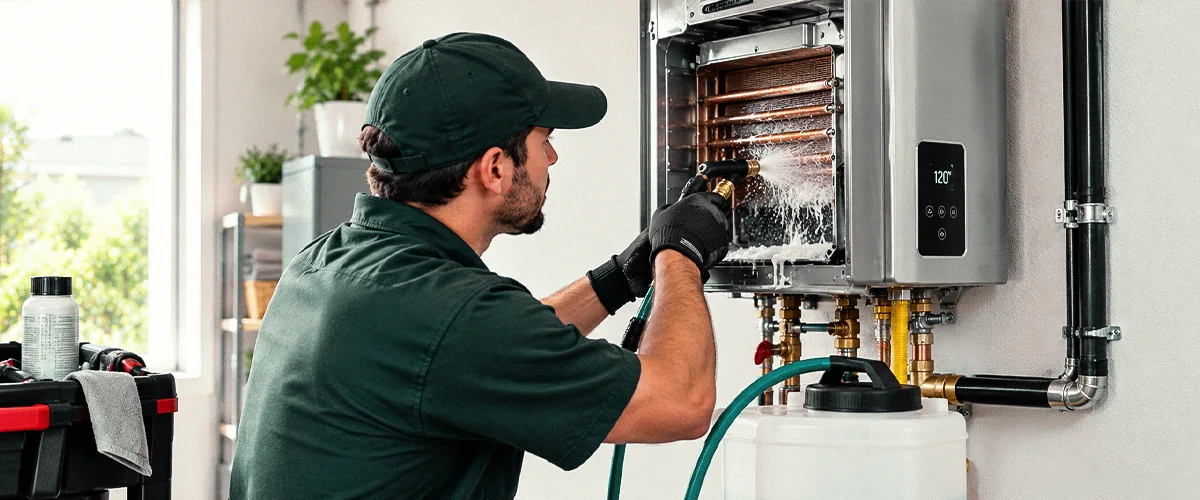
Tankless water heater flushing is the process used to remove scale from inside the unit. The process is easier to understand than it sounds. During flushing, a plumber connects the hoses to the unit. A descaling solution is then circulated through the heat exchanger. The solution helps to break up the buildup and remove the mineral scale. Then the plumber flushes the unit with clean water to wash away all the loosened buildup. They also make sure no descaling solution is left in the system.
This process usually takes less than an hour, but it makes a real difference in how the unit performs afterward. While some homeowners try this themselves, it is easy to miss a step or use the wrong solution. Professional tankless water heater service is the safer option for homeowners who are not familiar with the process. Such services make sure the flush is done safely. A certified plumber can perform the job properly without damaging the internal parts of the unit. It also gives you a chance to have other parts checked at the same time.
What Should Be Checked During Maintenance?
Descaling is a big part of care, but it is not the only thing that should be checked. A full water heater inspection should also look at:
- Sensors
- The heat exchanger
- The condensate trap
- Other internal parts
- Water and inlet filters
- Connections and fittings
The sensors help the unit read the water temperature properly. They also need to be in good shape. The condensate trap gathers sediments. If it gets clogged, it may affect the way the unit drains. Filters also catch little bits of dirt and sediment over time. If they get clogged, water flow is affected. A full water heater inspection can detect small issues, like a loose connection or a damaged part. repairing tankless water heater cleaning with a full inspection gives you the clearest picture of how your unit is really doing.
What Are the Best Tankless Water Heater Maintenance Tips?
Here are some simple tankless water heater maintenance tips every homeowner should follow:
- Descale your unit about once a year.
- Check and clean filters as recommended.
- Pay closer attention if you live in a hard water area.
- Follow the schedule your manufacturer recommends.
- Watch for changes in water temperature or water flow.
- Do not wait until the unit stops working to give it care.
- Book professional tankless water heater service when you notice something unusual.
These tips are easy to follow. They do not take much time. Moreover, they make a big difference in how long your unit lasts and how well it performs. A little bit of tankless water heater cleaning and care each year goes a long way toward avoiding costly repairs down the road.
How Can You Prevent Scale Buildup?
Descaling removes scales that have already formed, but there is another side to this. You can also lower the amount of scale that builds up in the first place. This is where whole house water treatment comes in. Water treatment does not replace the need for yearly care, but it can slow down how fast scale forms inside your tankless unit and the rest of your plumbing. For homes in hard water areas, this can make a real difference over the years.
At Parzival Plumbing, we offer two options for homes that want to reduce scale before it becomes a problem. The first solution is a water softener, and another is Flow-Tech. Both work in different ways. The aim of both options is to protect plumbing from the effects of hard water.
How Does a Water Softener Help?
A water softener removes the minerals that cause water hardness before they even get to your plumbing. These are the same minerals that cause scale to form inside your tankless heater. With fewer hardness minerals in your water, less scale reaches your plumbing and fixtures. This can help protect your tankless heater and other things in your home, like your faucets, dishwasher, and washing machine. A water softener is a proven option, and many homeowners in hard water areas already use one at home.
How Does Flow-Tech Help With Hard Water?
Flow-Tech takes a different approach. It does not use salt at all. Instead, it uses a low power electrical field to keep minerals suspended in the water instead of letting them stick to your pipes. This limits the amount of scale buildup in the plumbing system over time. No salt is required, so you don’t have to purchase or replenish salt. It also does not waste water and has no filters that need to be replaced. For homeowners who want a simple, low maintenance option, Flow-Tech is worth a look.
Does Water Treatment Replace Descaling?
A water softener or Flow-Tech does not replace annual tankless water heater descaling. This is one of the most common questions we hear, so let’s be clear about it. Water treatment and descaling do two different jobs, and they work best together. Water treatment helps prevent future scale from forming. Descaling removes buildup that has already formed inside the unit. One works before the problem starts, and the other deals with what is already there.
Even with a water softener or Flow-Tech installed, your tankless heater should still be maintained on the schedule your manufacturer recommends. Skipping yearly descaling because you have water treatment can still lead to buildup and lower performance over time.
Can Hard Water Affect the Whole House?
Hard water does not only affect your tankless water heater. It touches almost everything that uses water in your home. It can also impact your dishwasher and washing machine, causing them to work harder and wear out faster. Whole house water treatment works all the time, on every drop of water that enters your home. That means the benefit is not limited to just the water heater. It protects your fixtures, appliances, and pipes at the same time, which adds up to real savings over the years.
When Should You Call a Plumber?
There are clear signs that it is time to call a plumber for tankless water heater service. These include:
- You notice reduced water flow
- Your unit is showing error codes
- Your hot water feels inconsistent
- You hear unusual noises coming from the unit
- You notice any change in how the unit performs
- It has been about a year since your last descaling
- You have not had a recent water heater inspection
Noticing the above signs can help prevent more costly repairs. If your unit is already showing problems, our team can help. Find out how we can help solve problems before they become serious with our tankless water heater repair service. We provide plumbing services in Costa Mesa, Lake Forest, Aliso Viejo, Santa Ana, Irvine, and throughout Orange County.
Final Thoughts
A tankless water heater can give you years of reliable hot water, but only if you take care of it. Hard water is tough on these units, and yearly descaling is the best way to keep yours running strong. Filter checks, a full inspection, and the right water treatment help even more. They protect your entire home, not just your water heater. This is where Parzival Plumbing can help. Our team knows tankless systems inside and out. We know exactly how hard water in this area affects them. From descaling to full inspections to water treatment, our team can help keep your tankless water heater maintained.