A shower that leaves you standing in an inch of water has usually been slowing down for weeks. Drain unclogging is often a job you can finish at home in under half an hour, if the blockage is small and you match the method to the cause. In this blog, we will cover what causes clogs, what to try in order, what to skip, what to try in order, what to skip, and when Parzival Plumbing should step in.
What Causes a Drain to Clog?
Each clog happens in its own way, so start with what goes down that drain. In the kitchen, the main reason behind the clog is grease. It leaves the pan as a liquid, then cools and clings to the inside of the pipe like wax. Rice, eggshells, and coffee grounds stick to that coating, and the opening keeps shrinking. Bathroom clogs are mostly from hair, which forms a net that soap scum and toothpaste glue together. Laundry drains fill with lint. Toilets back up from too much paper or from wipes that never break down, even one labeled flushable.
Before you try anything, run water in the fixtures nearby. If only one drain is slow, the clog is probably in that fixture’s own pipe, and you can unclog drain problems like this yourself. If several are slow, the blockage is likely in a shared line, and a plunger will not reach it.
How to Unclog a Drain?
Work from the easiest method to the most involved. If several fixtures are slow, skip to the repair section.
Step 1: Remove Visible Debris
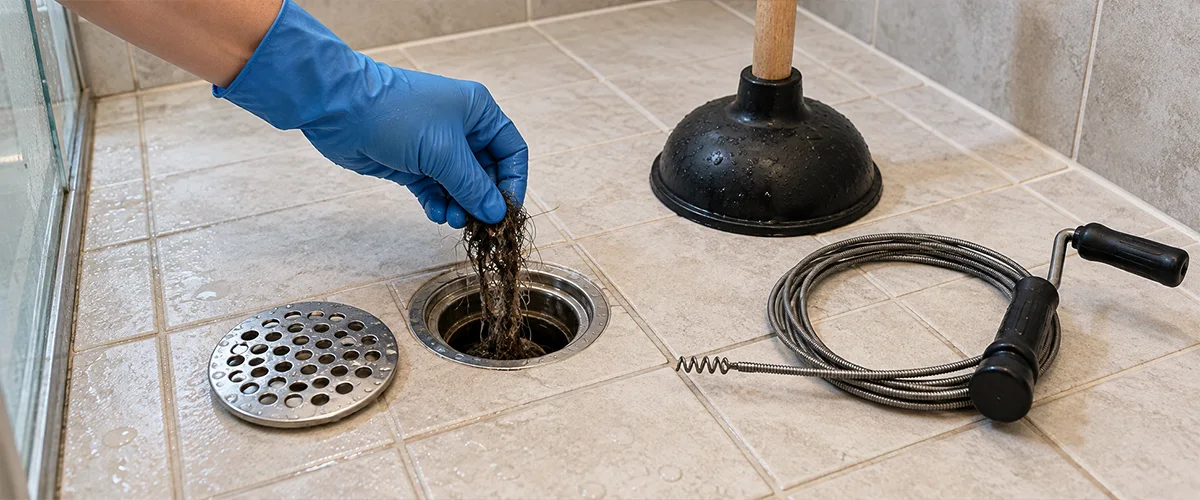
Use this first on any slow sink, tub, or shower. Lift out the stopper or strainer and pull out hair and slime with a gloved hand or a bent piece of wire. Wear gloves when unclogging a drain, since trapped debris is dirty and can be sharp.
Step 2: Try a Plunger
Use it when water sits near the opening. A plunger can unclog drain blockages close to the surface. Cover the cup of a flat-bottomed plunger with water, block the overflow hole with a wet rag, and plunge firmly for 15 to 20 seconds. Never plunge over a chemical cleaner, since splashes can burn skin and eyes.
Step 3: Use Hot Water for Light Grease Buildup
This suits a kitchen sink that is slow but still moving. Hot tap water can unclog drains that are only lightly coated with grease, so let it run for a couple of minutes. Skip boiling water, which can soften PVC pipe and crack porcelain. Hot water can also carry grease farther down the line, where it hardens again, so keep grease out of the sink afterwards.
Step 4: Try Baking Soda and Vinegar
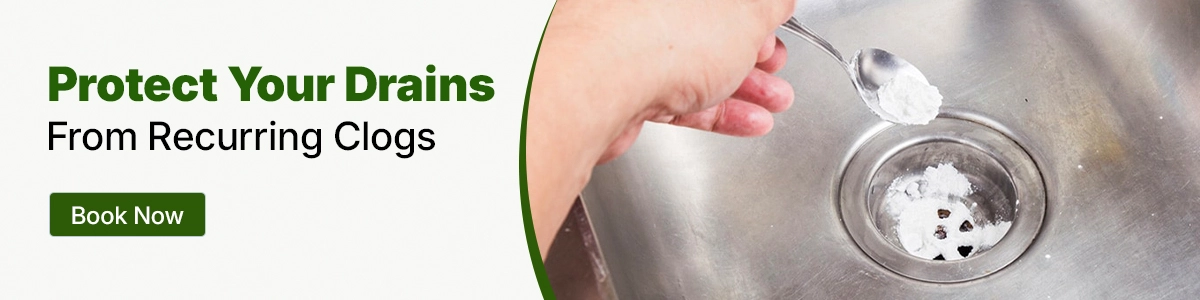
Save this for a slow drain with a soapy film. Pour in half a cup of baking soda, add half a cup of white vinegar, cover the drain, and wait 15 minutes. Flush with hot tap water. Unclogging drains this way will not move standing water or hair, and you should never use it right after a chemical cleaner.
Step 5: Use a Drain Snake
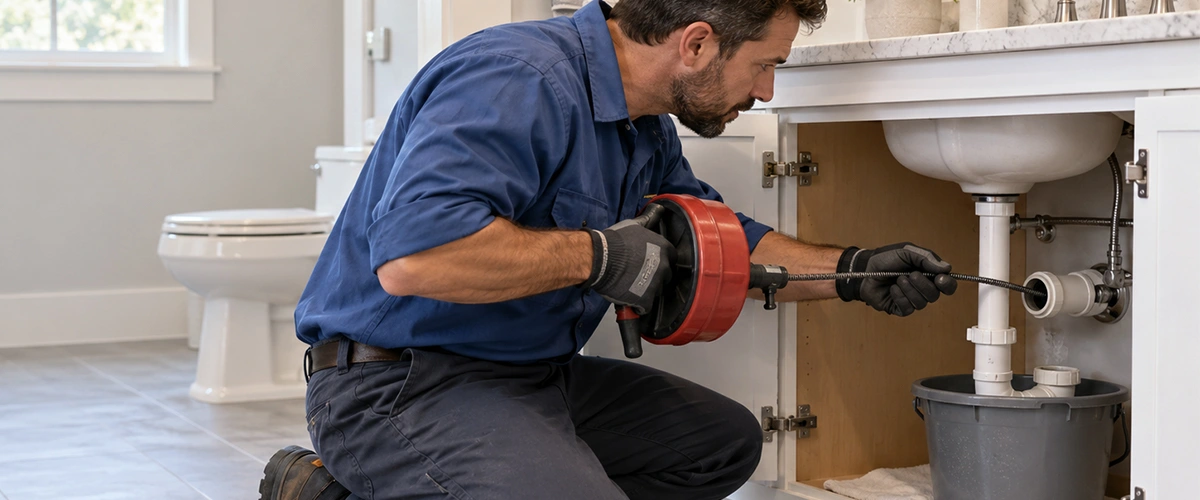
When the blockage is much deeper, use a snake to reach the blockage. Feed the cable in until it stops, turn the handle so the tip grabs the clog, then pull back slowly. Go gently, because force can damage older pipes. If a snake cannot unclog drain lines either, our drain cleaning services can take over.
What Should You Avoid When Drain Unclogging?
Chemical cleaners cause the most harm. Drain openers are caustic, so they burn skin and eyes on contact. One poison center report describes a toddler splashed in the face when a lye cleaner was poured into a sink full of water. Never mix two cleaners, or a cleaner with bleach or ammonia, because the mix can release toxic gas or dangerous heat.
They also have limits. A cleaner may cut a thin channel through a clog and leave the rest behind, so the drain seems the rest behind, so the drain seems fine for a few days. Drain unclogging with repeated chemical doses hides the cause instead of removing it, and some city utilities warn that these products can damage plumbing. If you do use one, follow the label, wear gloves and goggles, and tell your plumber if you later call. Also drop these habits:
- Pouring grease down the sink, even with hot water running.
- Flushing wipes, paper towels, or feminine products.
- Forcing a plunger or snake harder when nothing gives.
Why Does My Drain Keep Getting Clogged?
When the same sink slows down every few weeks, the first clog probably never fully left. A plunger or cleaner often opens a narrow hole and leaves the rest clinging to the pipe wall. Water runs again, but through a tighter pipe, so the next wad of hair or grease catches sooner. Sometimes the pipe is the real problem. A sagging section holds water and debris, a joint slightly out of line snags hair, and old metal pipe can rust inside and grow a rough surface. Outside the house, tree roots can push into a sewer line.
A gurgling drain can point to a venting problem, which no plunger will fix. If you are unclogging drain traps on the same sink again and again, it is time to look deeper.
When Do You Need Clogged Drain Repair?
DIY methods suit a simple clog in one fixture. If one sink drains slowly, it might be a minor clog. The same sink slowing every few weeks is a recurring clog. Water that sits after plunging and snaking points to a deep blockage, and several fixtures backing up together point to the main line. Professional clogged drain repair service in Orange County makes sense for those last three, and for any of these signs:
- Flushing a toilet makes water rise in a tub or shower.
- A floor drain bubbles or overflows when the washing machine runs.
- A sewage smell rises from the drains
- The clog returns within days.
- You suspect a cracked, collapsed, or root-damaged pipe.
Stop once you have used a plunger and a snake properly and the water still will not move. Stop right away if water shows up in another fixture. More force at that stage, such as unclogging drain pipes with stronger tools, can cause damage. If sewage is coming up, avoid using water in the house until it is dealt with.
A plumber can send a small camera into the pipe to see what is wrong, then clear it with proper equipment. Main line trouble falls under our sewer line services, and if water is backing up right now, call our emergency plumbing services.
How Can You Prevent Future Drain Clogs?
Put a hair catcher over the shower and bathroom sink drains, and empty it when it fills. Add a mesh strainer to the kitchen sink for food bits. Wipe greasy pans with a proper towel before washing, and pour cooled grease into a can for the trash. Flush only toilet paper and human waste.
Treat a slow drain that same week, while the buildup is still thin. A few minutes of upkeep beats unclogging drains once they stop completely. If buildup keeps returning, Parzival Plumbing can schedule a professional drain cleaning before it turns into a backup.
Final Thoughts
Drain unclogging at home works for small clogs in a single fixture. When water will not go down, keeps returning, or appears where it should not, the blockage is probably past what a plunger or snake can reach. If the basics have not worked, Parzival Plumbing can find the cause and handle the clogged drain repair, so you are not left guessing.