Many homeowners don’t want to clean toilet tank. Whether they like it or not, it is necessary to maintain hygiene and a good environment in the bathroom. When the cleaning routine is ignored for a long time, it leads to many plumbing problems. You start facing clogs in the toilet drain, water overflow, low water pressure, offensive smell, etc. So it is important to clean the toilet at regular intervals. It will help you maintain the appliance’s well-being, stop the spread of harmful germs, and keep your bathroom clean. Let’s talk about ways to clean toilet tank step by step. We will also discuss whether you should do it or call pros for the job.
Should You Clean the Toilet Yourself or Call a Plumber?
Many people remain in a state of uncertainty. They always wonder whether they should clean toilet tank themselves or call a professional plumber in the beginning.
Situations when you can clean the toilet yourself
- Regular cleaning & maintenance at a minor level. For example, scrubbing the bowl, removing stains, cleaning the seat, lid, and base.
- Removing minor clogs.
- Removing waterline stains or mineral buildup (it happens due to hard water)
When to Call Parzival Plumbing?
Recurring or Severe Clogs
If the toilet doesn’t flush completely even after multiple plunges, professional intervention is necessary. Remember, a deeper pipe blockage or a problem in the main sewer line causes this plumbing issue.
Leaking Toilet
If the toilet tank is leaking, call our professional plumbers in Costa Mesa. It happens due to a cracked seal, a broken fill valve, or a faulty wax ring. They will diagnose the problem & do the needful as required.
Weak or Incomplete Flushing
It happens due to a problem with the tank’s internal parts or low water pressure. We can fix it easily after examining the root cause of the problem.
Toilet Installation or Replacement
If you don’t have professional plumbing experience, refrain from doing it yourself. Call our professional plumbers in Orange County. They will ensure proper installation, sealing, and drainage.
Foul Odors
They don’t go away easily, even after multiple cleaning attempts. Our expert plumbers can get rid of this problem using different methods.
How To Clean A Toilet Tank?
When it comes to cleaning a toilet tank, our plumbers work in the following sequence. It helps us to achieve the best results and ensure the smooth functioning of the toilet for a long time.
Collecting the Required Tools & Solutions
First, we collect the required tools and solutions for cleaning the toilet tank. It may include the following:
- Rubber gloves
- White vinegar
- Baking soda
- Toilet brush or scrub brush
- Bucket
- Sponge or rag
- Old toothbrush
- Disinfectant &
- Safety goggles (in case we need to use bleach or commercial cleaners for cleaning a toilet tank).
Turning Off the Water Supply
Our plumbers search for the shut-off valve near the base of the toilet. They turn it clockwise to stop the water flow to the toilet completely. It is necessary to inspect the plumbing problem in the toilet tank.
Flushing The Toilet
Usually, the toilet tank is filled with water. So, our plumbers drain most of the water. For this, they hold down the handle to empty as much water as possible. If a small amount of water remains at the bottom even after flushing, they will remove it with a sponge or towel.
Inspecting the Inside of the Toilet Tank
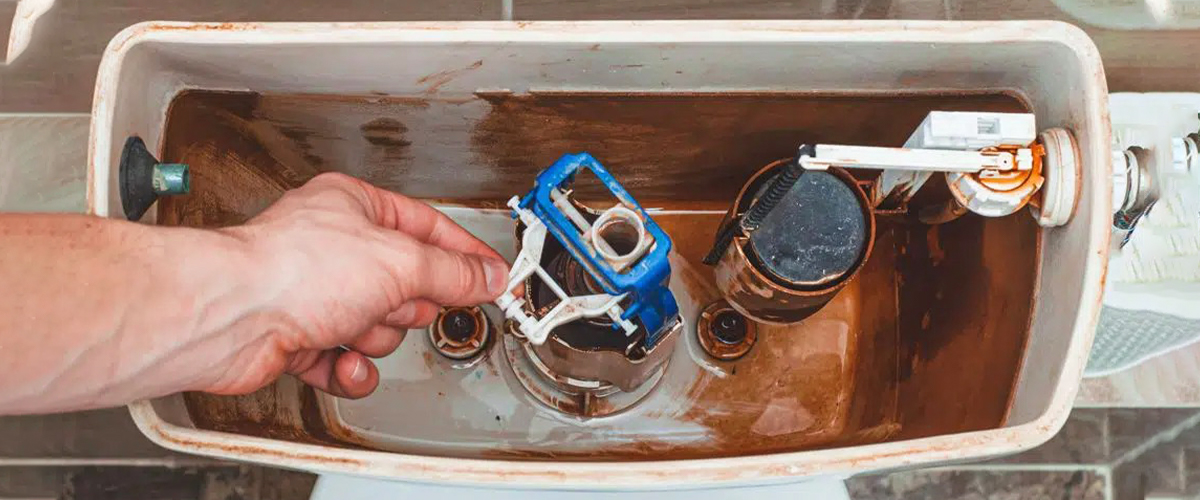
An honest inspection of the toilet tank is the key to solving the plumbing problem. So, we look inside the toilet tank and look for:
- Clogs at the bottom
- Mold growth
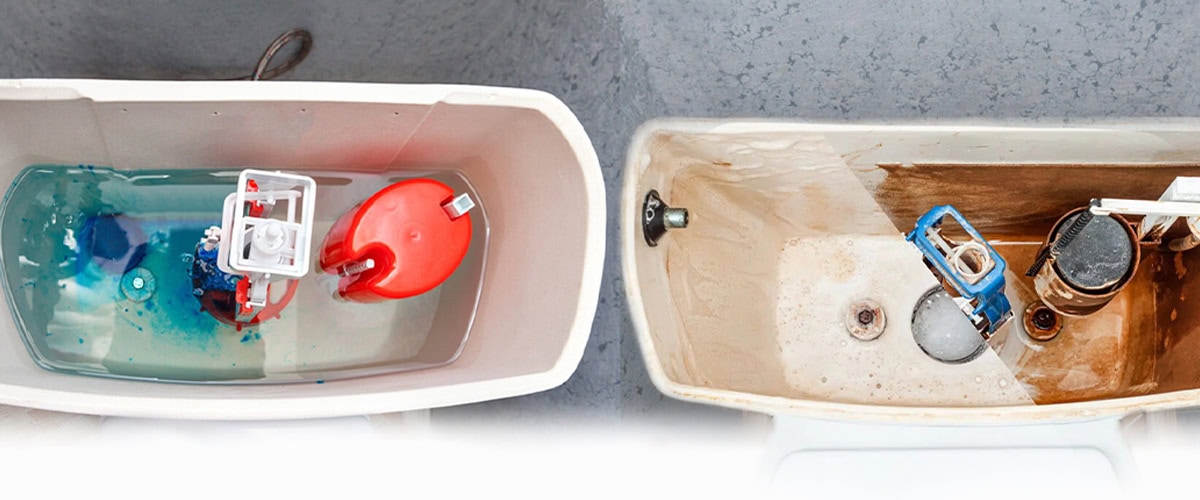
- Rust or mineral deposits on the walls and components, etc.
If there are heavy clogs, we may use a commercial tank cleaner to achieve the best results
Using Vinegar
If there are minor clogs in the toilet tank, we pour 2–3 cups of white vinegar into it. Then, wait for 25-30 minutes. If there are heavy clogs, we may wait at least one hour. Remember, vinegar dissolves mineral build-ups and kills harmful organisms.
For effective cleaning, we may add some baking soda after the vinegar. Our plumbers protect themselves while cleaning the toilet tank. Also, they keep the toilet lid closed during this time to avoid fumes and splashing.
At last, we turn the water on and flush a few times to clean toilet tank completely. Remember, this process takes more time. So, for quick cleaning, we might use warm water with vinegar. It removes complex clogs and & grime faster.
Scrubbing the Tank
After soaking, our plumbers put on rubber gloves and scrub the inside walls of the toilet tank. They might use a scrub brush, a toilet brush, or an old toothbrush for this. They will clean around the edges, bolts, and seals where sticky substances can hide. If vinegar doesn’t yield the desired results, we might use a bleach solution (1 part bleach to 10 parts water). It helps us clean a toilet tank perfectly.
Rinsing and Refilling The Toilet Tank
Once the above-mentioned cleaning activities are finished, we turn on the water supply to the toilet tank. Once it is filled with water, we flush it 2-3 times to clean any remaining dirt.
Trial and Dealing With Toilet Plumbing Issues
Remember, while cleaning the toilet tank, we may come across other plumbing issues. If you did not clean and maintain it for a long time, damage to its spare parts, pipes, etc., is possible. We inform you about the plumbing problem during the inspection process. If required, our plumbers may replace pipes, valves, or the toilet setup itself to eradicate the plumbing problem completely.
If no additional problems are found during the trial and inspection process, our plumbers complete the toilet tank cleaning task smoothly. They just wipe down the tank’s exterior, handle, and lid using a cleaning spray or disinfectant wipes. This helps clean toilet tank inside and out. As a result, your toilet starts working like a new one.
How Often Should You Clean Your Toilet Tank?
For most homes, cleaning the tank every six months is a good routine. It only takes a little time, and it keeps small problems from growing. If your home has hard water, you may want to do it every three to four months, since minerals build up faster. Don’t wait for the calendar if you see trouble. Chalky mineral buildup, rust stains, or dirt floating in the water are all signs it is time. Good toilet tank maintenance protects the small parts inside, like the flapper and fill valve, so they do not stick or wear out early. If you are not sure where to start, the toilet tank cleaning tips above walk you through it.
Which Toilet Tank Parts Should You Inspect During Cleaning?
While the tank is empty, check the parts inside. The flapper is the rubber piece at the bottom, and it should feel soft and seal tightly. The fill valve refills, so look for leaks around it. Check the flush valve under the flapper for rough spots. The overflow tube is the tall center pipe, and the float is the ball or cup that rises with the water. The float should move freely.
Cracks, leaks, crusty buildup, or a part that sticks are signs it needs attention. Catching this early is part of good toilet tank maintenance, since worn parts cause weak flushes and water waste. Add it to your toilet tank cleaning tips list.
Frequency of Using Our Toilet Plumbing
Remember, toilets are used extensively in homes and commercial apartments every day. But their cleaning and maintenance are often ignored. This leads to major plumbing issues and costly repairs. Use Parzival Plumbing’s toilet cleaning services at least once in 90 days or before. It will help you keep the toilet clean and eliminate plumbing issues in their initial stages.
Conclusion
You may not like cleaning your toilet tank for any reason. But it’s necessary for maintaining hygiene on the premises and ensuring the good health of all individuals. By following the above-mentioned tips, you can clean a toilet tank if there are minor issues. For professional cleaning and maintenance of toilets, Parzival Plumbing is always happy to help. We use numerous methods to clean toilets and make them work like new ones.