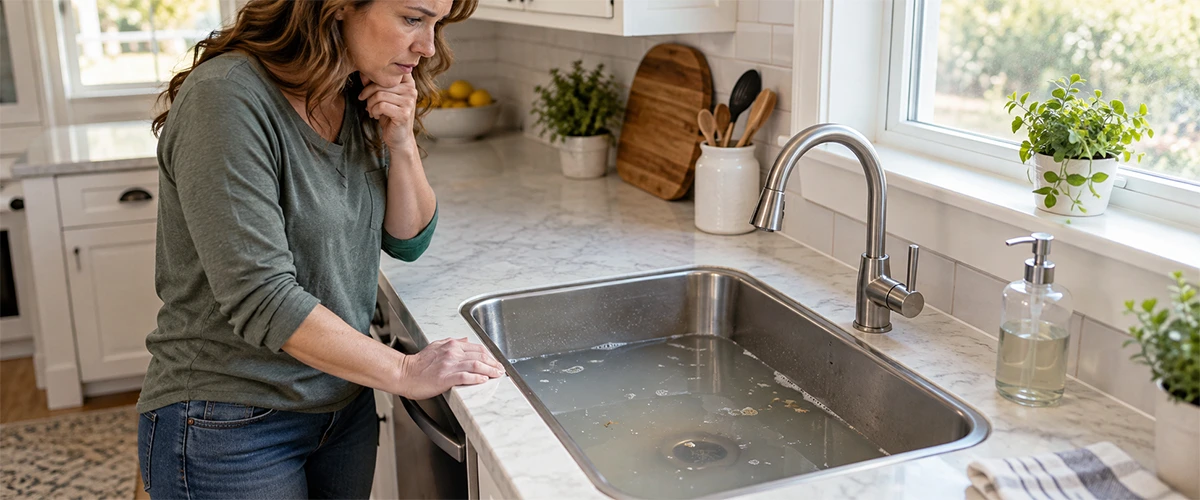
You finish the dishes, and the sink is still holding gray water. Or you step out of the shower and notice the water never quite drained. Many minor clogs can be cleared with a few simple tools. Drain unclogging works best when you act early, before a slow drain becomes a full blockage. Other problems keep coming back or sit deeper than home methods can reach. Here is what causes clogs, what is safe to try, and when to stop.
What Causes Household Drains to Clog?
Kitchen sinks collect grease, oil, and food scraps. Warm grease cools and hardens on the pipe walls, food sticks to it, and the opening slowly narrows. Bathroom sinks and showers deal with hair, soap scum, and product residue. Hair catches soap film and forms a dense mat just below the drain. Toilets clog from too much toilet paper at once or from items that do not break down, such as wipes, cotton swabs, paper towels, and hygiene products.
Inside the pipes, hard water minerals and debris build up over time, roughening the pipe walls and giving other waste more to cling to. The main sewer line can be blocked by tree roots entering pipe joints, sagging or broken sections, or waste from the whole house collecting at one point.
Drain Unclogging Tips Homeowners Can Try
When only one fixture is slow, a few simple clogged drain solutions often work. Start with the gentlest option and move on only if it fails.
Clear visible debris
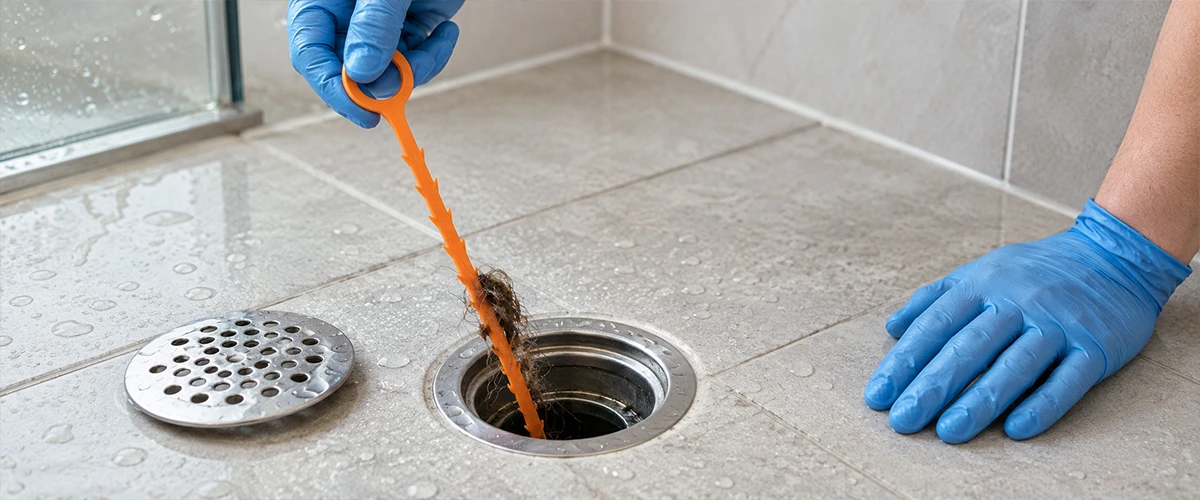
Put on gloves, remove the drain cover, and pull out any hair or gunk near the top. A plastic barbed drain strip can reach a few inches further.
Clean the stopper or strainer
Most stoppers and strainer baskets lift out or unscrew. Scrub off the buildup and reinstall them. Cleaning the stopper is often all it takes to get a sluggish bathroom drain moving again.
Use a plunger correctly
Use a cup plunger for sinks and tubs and a flange plunger, which has an extra rubber sleeve, for toilets. With water covering the cup, press down for a tight seal and push and pull several times firmly. On a double basin sink, plug the other basin first. On bathroom sinks and tubs, cover the overflow opening with a wet cloth.
Run hot tap water
For light grease in a kitchen sink drain, running the hottest tap water for a few minutes may soften the residue. It will not clear hair, solid food, or a full blockage. Avoid boiling water, which can damage some plastic pipes and seals and crack porcelain.
Try a hand drain snake
A small, hand cranked snake can reach clogs a few feet into the pipe. Feed it in slowly, turn the handle when you feel resistance, and pull the debris out. Do not force it, especially in older or fragile plumbing, since that can scratch fixtures or damage pipes.
Be careful with chemical cleaners
If you use a chemical drain cleaner, follow the label exactly. Never mix it with bleach or other products, since that can release toxic fumes, and never plunge or snake a drain containing chemicals.
How to Prevent Clogged Drains
Good habits mean you will need drain unclogging far less often.
- Put a mesh strainer over every sink, shower, and tub drain so hair and debris get caught before they reach the pipe.
- Let the cooking grease cool in a can, then throw it out. Wipe greasy pans before washing.
- Keep coffee grounds, eggshells, and food scraps out of the sink, even with a garbage disposal.
- Rinse bathroom stoppers every few weeks, before hair builds into a mat.
- Flush only toilet paper and human waste. Wipes belong in the trash, whatever the label says.
- Act when a drain starts slowing. A partial clog is far easier to clear than a complete one.
Signs You May Have a Sewer Line Blockage
A sewer line blockage affects the main pipe carrying all of your home’s wastewater, so the signs usually appear in more than one place. Watch for several drains slowing at once, water backing up into a tub, sink, or floor drain when you flush, gurgling toilets, recurring clogs, and persistent sewage odors. These symptoms do not automatically mean a sewer line blockage. A clog in a branch line or a venting problem can cause similar signs. If sewage is backing up, stop using the connected fixtures and appliances and call a qualified plumber promptly.
When to Call a Professional for Drain Cleaning Services
Professional drain cleaning services make sense when a drain stays clogged after reasonable attempts, keeps clogging, or when several fixtures are affected. Depending on the blockage, the condition of the pipe, and where the clog sits, drain pipe cleaning may involve a motorized snake that reaches further than a hand tool or other equipment suited to that line.
For recurring clogs or a suspected sewer problem, a plumber may recommend a sewer camera inspection to see whether roots, a damaged pipe, or heavy buildup is the cause. Finding the cause matters, because drain pipe cleaning alone will not fix a cracked or sagging pipe.
Final Thoughts
Most clogs start small. Strainers, careful grease disposal, and regular stopper cleaning prevent many of them, and quick attention to a slow drain keeps drain unclogging simple. When clogs keep returning, several drains act up at once, or you suspect a sewer line blockage, the problem likely needs more than a plunger. Parzival Plumbing offers drain cleaning services to help homeowners find and fix the cause. If you would like someone to take a look, reach out to our team and we will set up a time to come by.