Many older homes in Orange County still have their original cast iron drain lines running under the slab or through the yard. After decades of use, rust, scale, and buildup can coat the inside of these pipes. Calling a plumber for repeated drain cleaning might clear a clog for a while. However, it does not fix a pipe that is deteriorating from the inside. Traditional replacement is always an option, but it can mean breaking through the concrete, flooring, or landscape to reach the line. Here, trenchless drain line restoration offers another path when the existing pipe is still structurally sound enough to be restored. This blog walks through what that process involves, how it is different from routine cleaning, and when it is worth considering.
What Is Trenchless Drain Line Restoration?
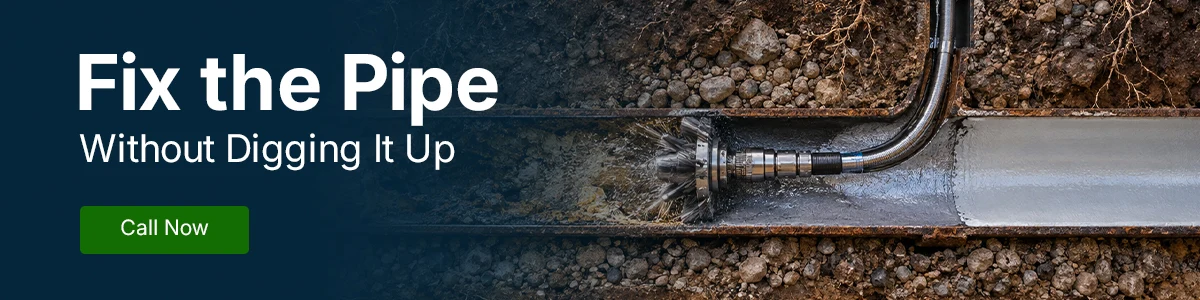
Trenchless drain line restoration means fixing the pipe from the inside instead of digging it out and replacing it. This is called pipe relining, and instead of removing the old cast iron line, a plumber coats the inside surface and puts a new liner inside the existing pipe. The general process looks like this:
- Plumbers assess the condition of the existing pipe.
- The plumber clears out debris and buildups.
- They mechanically remove heavy scales or corrosion.
- The pipe is inspected a second time.
- The technician installs a resin-based liner inside the pipe.
- The liner hardens in place as it cures.
- A final inspection confirms the work is complete.
This kind of trenchless sewer line repair may be considered when a cast iron line has deteriorated but can still be used for lining. Not every damaged pipe qualifies, and the only way to know is to look inside it first.
Why Old Cast Iron Drain Lines May Need Restoration
Cast iron pipes deteriorate gradually, not all at once. Minerals in the water leave scale behind. Rust collects on the inner walls of the pipe. Grease, hair, and other debris stick to the rough surface, and over time the opening inside the pipe gets smaller. That is usually when homeowners start noticing slow drains or backups that keep coming back.
Cleaning and restoration solve different problems. Hydro jetting can clear out what is blocking the line right now, but it does not change the condition of the pipe wall underneath. Once the water pressure finishes, the rust and scale that caused the problem often remain attached to the pipe, just loosened up a bit.
When the inside of a cast iron drain line is badly damaged, cast iron pipe lining can restore the pipe from the inside. This reduces the excavation, and it all depends on how far the deterioration has gone.
How Trenchless Drain Line Restoration Works
Sewer Line Camera Inspection
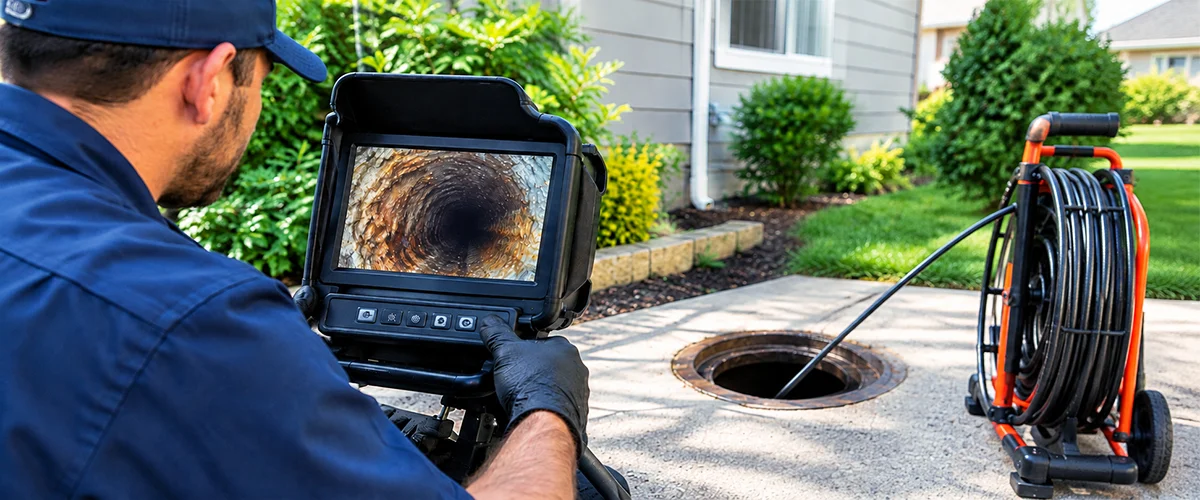
Before anything else happens, a plumber runs a camera through the line to see what is actually going on inside. The plumber sees whether there are cracks or damaged sections. Sewer line camera inspection is what determines if lining is even the best option.
Hydro Jetting Clears the Line
Plumbers use high-pressure water to break down the buildup and flush out grease and debris sitting in the pipe. Parzival Plumbing’s hydro jetting service handles this step, clearing the way for a closer look at what remains on the pipe walls.
Mechanical Descaling
Hydro jetting handles the loose material, but rust and mineral deposits that scale around the cast iron need a different approach. Mechanical descaling uses rotary tools designed to break that buildup off the pipe wall. This step prepares the surface for cast iron pipe lining.
Second Camera Inspection
Another sewer line camera inspection follows the descaling work. This lets the plumber confirm the scale has actually come off. With this inspection, the plumber checks whether the pipe is clean enough and decides if the line is ready for lining or needs more preparation.
CIPP Liner is Installed
CIPP stands for cured-in-place pipe. A resin-soaked liner is installed inside the prepared pipe. The plumber then cures it until it hardens. This creates a new surface inside the old cast iron pipe. This process is an important part of both types of pipe lining: sewer pipe lining and cast iron pipe lining.
Final Camera Inspection
At last, the plumber uses a camera to inspect the situation inside the pipe. This last camera pass checks that the liner is properly positioned and that the restored section is open and functioning the way it should. It gives a clear view of the pipe’s interior.
Why Descaling Is Required Before Pipe Lining
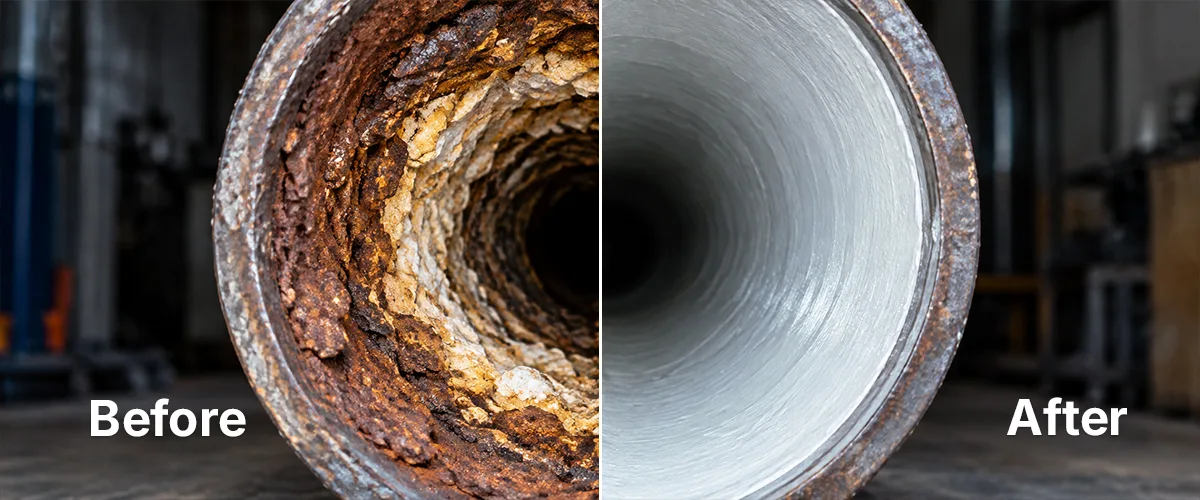
Lining an old cast iron pipe is not as simple as sliding a liner into a dirty pipe and calling it done. If rust and scale still stick to the walls, the resin cannot bond to a clean surface. Here is why that matters. Heavy buildup creates gaps and uneven spots between the liner and the original pipe. If the surface is not properly prepared, it can contribute to problems such as blistering or the liner pulling away from the pipe wall.
This is why cleaning and mechanical descaling are not a separate, skippable step. They are part of what makes sewer pipe lining work the way it is supposed to. Skipping descaling to save time on a cast iron pipe lining job tends to show up as a problem later. That is exactly why it should not be skipped in the first place.
When Should Homeowners Consider Trenchless Restoration?
When drain issues keep coming back, repeated cleaning may not solve the problem. These signs can suggest that a deeper repair may be needed.
- Your home has original cast iron drain lines and is several decades old.
- Drain backups keep happening in the same area.
- You have called for drain cleaning more than once for the same line
- Water drains more slowly than it used to, even after cleaning.
- A camera inspection has shown corrosion or scale buildup.
- The line has already been patched or repaired before.
- You would rather avoid excavating through a driveway or patio.
This means trenchless sewer line repair is not the right fit for every situation. A sewer line camera inspection is really the only way to know whether a specific pipe can be used for lining or whether another repair method makes more sense. We provide same-day plumbing services in Tustin, Santa Ana, Newport Coast, Seal Beach, and throughout Orange County.
Final Thoughts
An aging cast iron drain line does not always show signs from inside. Repeated cleaning clears the blockage, not the buildup or the rust. Full replacement is still an option, but it can mean digging through a driveway, floor, or yard. Trenchless drain line restoration may be worth considering when the existing pipe is still in good condition. The process involves steps from camera inspection to cleaning, mechanical descaling, lining, and a final inspection. Parzival Plumbing can inspect your cast iron pipe and can recommend which repair option fits. If your drain keeps backing up, reach out to our team to get it checked.