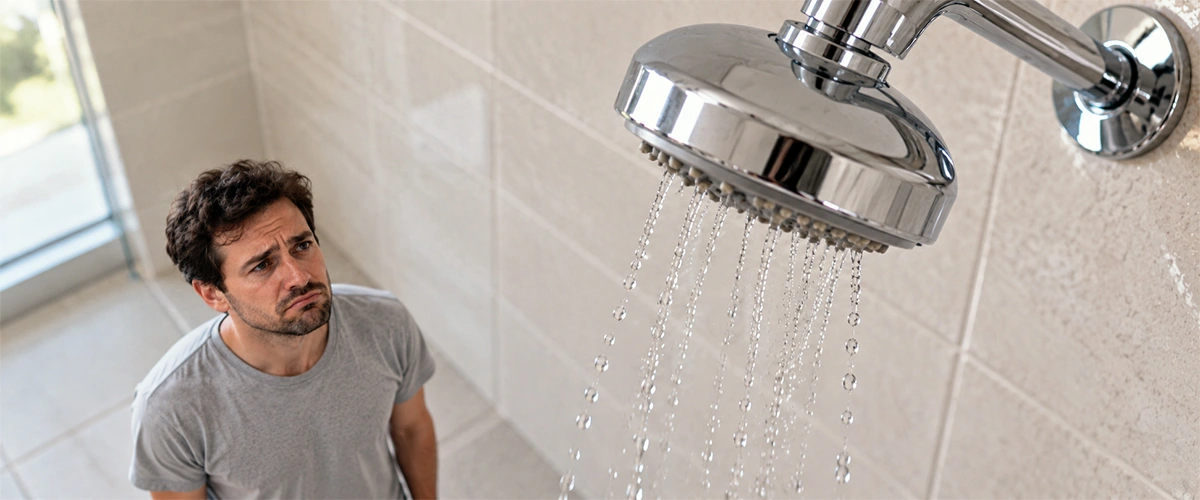
A shower that barely rinses out shampoo or a bathtub that takes forever to fill is often the first sign you need to increase water pressure. Your next move changes depending on whether just one faucet is weak or every tap in the house is. Homeowners often describe it as weak water pressure at faucets, showers, and appliances all at once, which usually points to a problem further back in your plumbing or supply. When the weakness is limited to a single faucet, a clogged aerator is usually the culprit, and cleaning it often takes a few minutes. The steps below show you how to tell the difference and improve water pressure in your home plumbing safely.
What Is Normal Home Water Pressure?
In general, homes have water pressure within the range of 40-60 psi. This is to be seen as a reference number rather than a measure that has to be followed by each household. Adequate water pressure varies from house to house owing to different plumbing systems. Sometimes, the water pressure may be excessive as well. Most of the plumbing codes state that regulators are required if the water pressure is over 80 psi since high water pressure does harm to pipes, devices, and appliances.
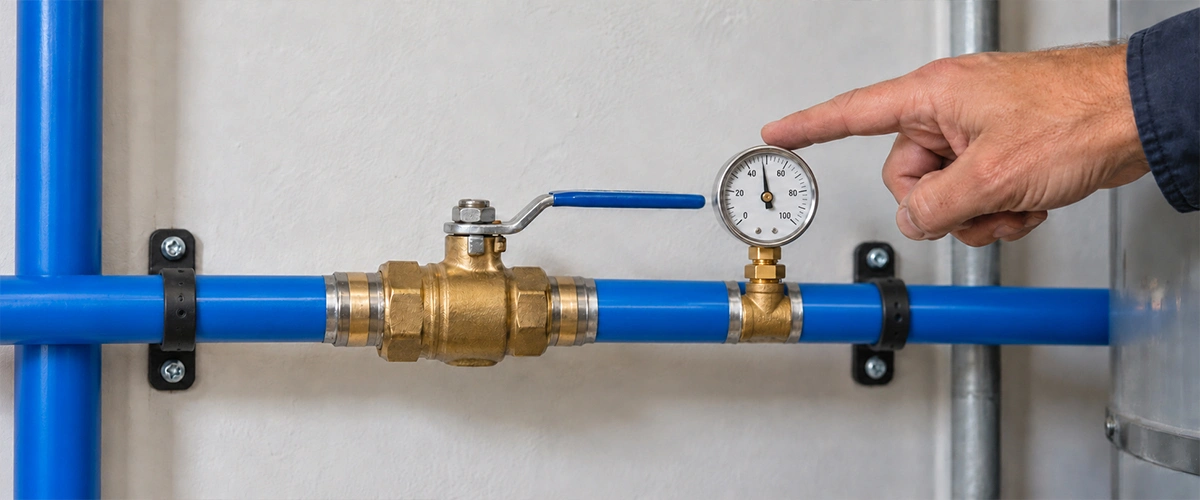
A basic pressure gauge costs very little at a hardware store, and it will tell you exactly what your water pressure is. Screw it onto an outdoor hose bib, make sure no water is running inside the house, open the tap fully, and read the dial. Pressure changes during the day, so test at different times. If the gauge shows under 40 psi, your water pressure really is low. If it reads normal but the water still trickles out, something is restricting the flow, most likely a clogged fixture or pipe.
Why Is Water Pressure Weak in House Plumbing?
Pressure and flow describe two different things, and mixing them up makes the problem harder to diagnose. Think of pressure as the push behind the water as it enters your plumbing. Flow is the water you see coming out when you turn something on and feels like the water pressure weak in house. Pressure can be normal and the flow still weak if a fixture is clogged, so where you see the problem tells you a lot about the cause of low water pressure.
Clogged Fixtures and Pipes
Hard water minerals, common in Southern California, can block aerators and showerheads. When just one fixture is giving you trouble, begin with that fixture before looking at the rest of the plumbing. Inside older galvanized steel pipes, corrosion and scale can narrow the pipe and reduce flow at several fixtures.
Water Leaks
A leak diverts water before it reaches your fixtures. It matters most on the supply line between the meter and your home. High water bills, soggy patches in the yard, or running water sounds when everything is off are common signs.
Partially Closed Main Shutoff Valve
A main shutoff valve that is only partly open limits the water reaching every fixture in the house, not just one. This sometimes happens after plumbing work.
Municipal Water Supply Problems
A main break, repair work, or heavy demand can lower pressure for several homes at once. If your neighbors notice the same thing, the problem is probably outside your property.
Water Heater Problems
If only the hot water is weak and the cold is normal, check the water heater, its shutoff valve, or the hot-water piping. Sediment can restrict hot water flow. A water heater issue does not normally lower pressure throughout the home.
Pressure Regulator Issue
The home water pressure regulator, also called a pressure reducing valve, lowers street pressure to a safe level. Look for a small, bell-shaped valve on the main line close to where it comes into the house. A failing regulator can leave you with weak pressure, excessive pressure, or pressure that keeps changing.
How To Improve Water Pressure in House Plumbing
Work through these steps in order. The first few checks are quick, and they may spare you a repair bill you didn’t need.
Find out how widespread the problem is
Test the shower, a kitchen sink, a bathroom faucet, and an outdoor spigot, on both hot and cold. If only one fixture is weak, the blockage is most likely right at that fixture. Weakness everywhere means you should keep going.
Clean faucet aerators and showerheads
Remove the aerator or showerhead and see whether scale has built up inside or around the small holes. Soak the parts in vinegar for a short time, scrub gently with a small brush, rinse, and reinstall. Check the manufacturer’s guidance first if the fixture has a special finish.
Check the main water shutoff valve
Locate the main shutoff valve at the point where the water line comes into the house. If your valve has a round wheel, turn it all the way to the left. If it has a lever, the handle should run in the same direction as the pipe when the valve is open. Never force a stiff or stuck valve, since an old valve can break and flood the house. Don’t touch the valve at the water meter, since that one belongs to the utility.
Look for signs of leaks
Make sure nothing in the house is using water, then take a look at your water meter. If the dial keeps moving, water is escaping somewhere. Damp walls and soft spots in the yard are other signs. Hidden leaks on pressurized lines are best handled by a professional.
Advanced Fixes To Increase Water Pressure Safely
Check your water pressure with a gauge
Use the gauge method described earlier. If the gauge reads normal but the water is still weak, something is blocking it at a fixture or in the pipes. If the reading is low and every tap is weak, look at the supply or the pressure regulator. Anything above 80 psi needs a plumber.
Have the pressure regulator inspected
A home water pressure regulator can be adjusted, but changing the setting without a gauge and the right knowledge can push pressure past the safe limits. Have a plumber test the regulator if your gauge readings are off or keep changing, or if you hear banging in the pipes. For a worn valve, replacement is often better than adjustment.
Investigate pipe restrictions or aging plumbing
When the gauge looks fine but weak water shows up at more than one fixture, scale or corrosion inside the pipes could be narrowing the way through. Older homes with galvanized steel plumbing are the most likely to have this problem. A plumber can tell you whether a section or the whole system needs replacing. Replace everything only after a broader problem is confirmed.
Consider a booster only after diagnosis
A booster pump takes the pressure coming into your home and raises it. It helps when incoming pressure is consistently low, and there are no leaks, clogs, or regulator faults. A booster can’t unblock a pipe or fix a leak, and pushing more pressure through worn or damaged plumbing can make things worse. Have a plumber size and install it.
Final Thoughts
Most pressure problems trace back to a clogged fixture, a valve, a leak, the regulator, or the water supply. Start with the simple checks to improve water pressure in house plumbing, then move to the larger ones. If you still can’t increase water pressure or can’t find the cause of persistent low water pressure, Parzival Plumbing can help. We provide plumbing services in Orange County and can identify the problem and recommend the right repair.