Beneath homes, commercial apartments, warehouses, and other buildings, a complex network of sewer lines lies. It collects wastewater and transports it into the main sewer lines or a treatment facility for further treatment and disposal. Therefore, sewer line installation is an important issue for all homeowners. Its proper installation helps manage wastewater and maintain sanitation in homes and apartments. So the biggest question is: how to install a sewer line? Should you try to do it yourself or hire professional plumbing experts? Let’s explore.
Why Is Professional Sewer Line Installation Important?
To install a sewer line in a home or commercial building, one needs to take care of different things and perform the job without making silly mistakes. Just a single fault in underground sewer installation can cause damage to your property and may lead to many plumbing issues in the future. That is why we recommend you use our residential sewer line installation in Costa Mesa. Just book your appointment with us and leave everything to our experts. Our professional plumbing experts will reach the specified address on the scheduled date and install the sewer line per your recommendations.
Sewer Line Installation Process: Step-by-Step Guide
Site Evaluation and Sewer Line Planning
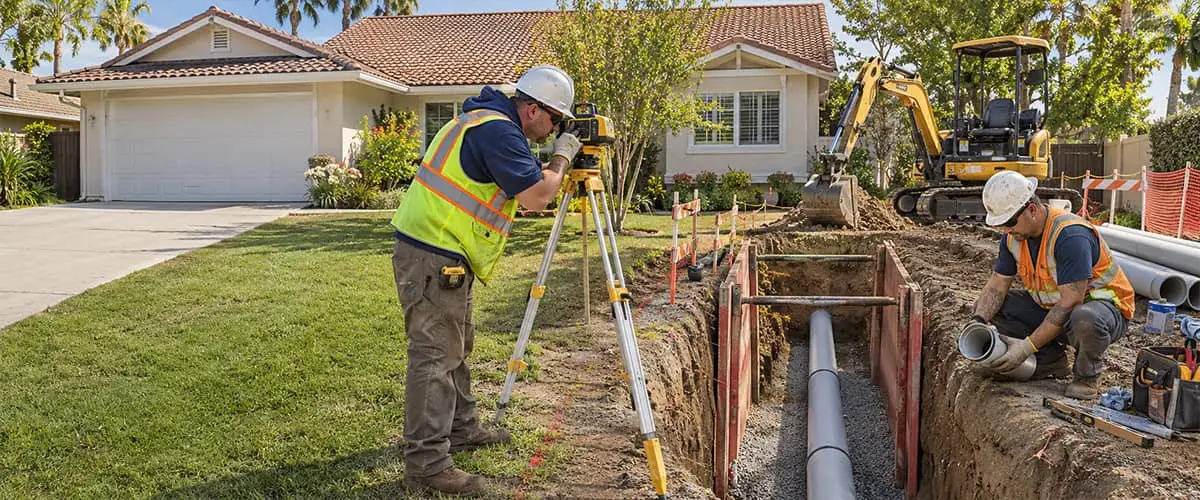
At first, our plumbing experts will evaluate the site location, soil type, and terrain. This allows them to determine the correct position of the sewer line and identify possible barriers, such as nearby buildings, rocks, trees, and public areas, that can block its installation. Remember, sewer line installation needs stable and load-bearing soil. The initial evaluation allows us to create a plan of action and take further steps.
Getting Permits for Sewer Line Installation
Before installing sewer lines, our plumbing experts contact the local authorities and get the necessary permission. Remember, rules and regulations regarding underground sewer installation change from one place to another. Prior approval from local authorities helps us perform the job smoothly.
Preparing Sewer Pipes, Materials, and Tools
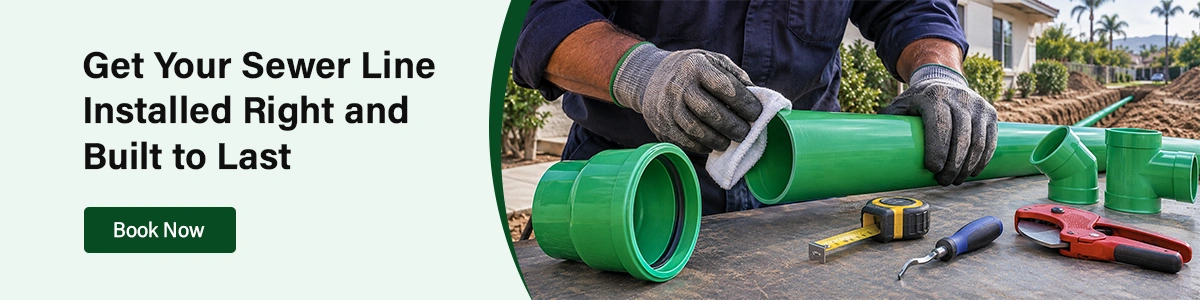
We start gathering the necessary materials and tools for sewer line installation. It may include the following:
Materials-
- PVC or ABS sewer pipes of different sizes and lengths.
- Pipe fittings.
- Cleanout assemblies.
- Concrete mix.
- PVC primer, cement, ABS glue.
- Concrete mix.
Tools-
- Pipe cutters or saws
- Level or a laser level
- Shovels and rakes
- Wrenches or pliers
- Tape measure
- Marking tools
- Sewer camera and inspection equipment
- Trenching equipment (like a backhoe or excavator)
- Safety equipment, hard hats, gloves, and safety glasses.
Notifying Neighbors Before Sewer Installation
If sewer installation is likely to disturb neighbors, inform them in advance. It will help you to avoid potential conflicts and disruption.
Excavating the Sewer Line Trench
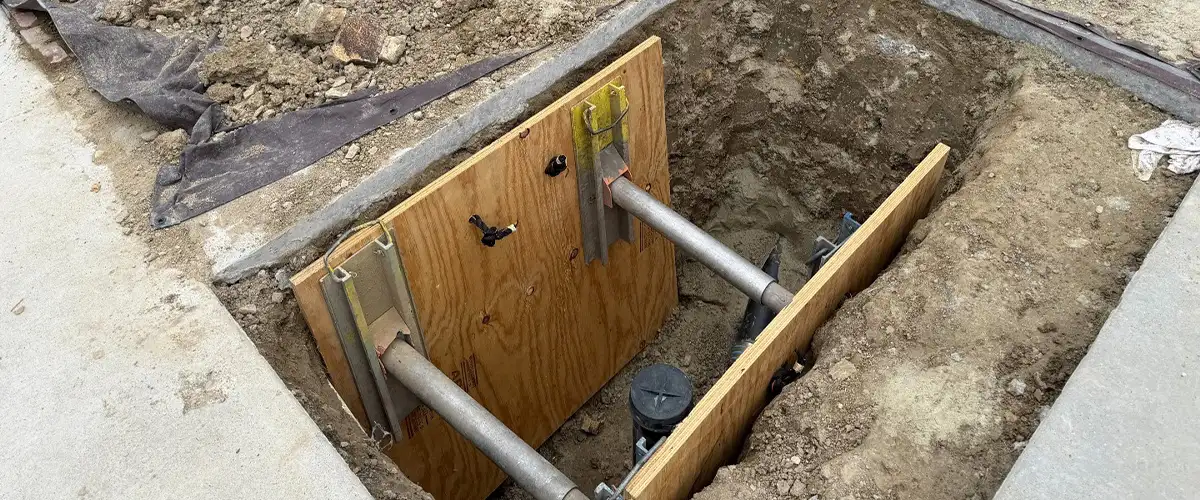
Our plumbing experts will dig the trench and ensure it is wide enough to accommodate pipes. They also handle underground utilities or obstacles and try to avoid damage as much as possible.
Laying and Connecting Sewer Pipes
Our plumbing experts start laying drain pipes carefully and interconnect them using PVC primer and glue. They also add cleanout access points at important locations for future cleaning and sewer system maintenance work.
Sewer Pipe Inspection and Backfilling
After installation, our plumbing experts double-check the entire pipeline and ensure everything is okay. If required, they will fix issues with newly installed pipes to ensure they are properly connected. After this, they fill the trench with soil to support the pipe. At last, they level the ground and reseed the disturbed areas.
Testing the Newly Installed Sewer Line
Our plumbers check sewer pipes again after installing and backfilling to ensure there are no complications in sewer lines and that they are safe for use. For this, they often use hydrostatic pressure testing. In this process, sewer pipes are filled with water and pressurized above the normal level. It will help them to detect possible leaks and fix them. If required, they might also inject non-toxic smoke into sewer pipelines to find leaks and patch them.
How to Maintain Your Sewer System After Installation
A new sewer line can last for decades, but a little care goes a long way. Good sewer system maintenance starts with a professional inspection every year or two. It helps catch small leaks, cracks, and early blockages before they turn into bigger headaches. At home, keep wipes, even the flushable ones, grease, paper towels, and other junk out of your drains and toilets. They are the most common cause of clogs.
Pay attention to slow drains, repeated clogs, sewage smells, or wastewater backing up. These are signs something is wrong underground. If you notice any of them, call a plumber early. A sewer camera inspection shows exactly what is going on inside the pipe, so a quick repair now can save you from a costly one later.
Why Choose Professional Sewer Line Installation Services?
- We inspect the residential sewer line installation area very well and create a plan of action. It helps to avoid shallow or deep sewer line installation. Remember, gardening and traffic may damage a shallow line. On the other hand, maintaining and repairing deep sewer lines is very difficult.
- We ensure there are no sharp turns or bends in sewer lines. They cause frequent clogs and costly repairs.
- We avoid pipe mismatches. Our plumbing experts use only specific materials to ensure the quality of the work done.
How Long Does Residential Sewer Line Installation Take?
It depends on the complexity of the underground sewer installation, soil quality, and potential obstacles. Our plumbers will evaluate the sewer installation site and will notify you about the possible time required to perform the job.
How Much Does Sewer Line Installation Cost Per Foot?
The average cost of sewer line installation per foot may range from $20-$100. It will depend on your area, excavation needs, the type of pipes you want to use for sewers, soil quality, etc. Discuss your requirements with us and get price quotes. It will help you to manage your budget accordingly and access our services comfortably.
Conclusion
Sewer line installation in a home or commercial building requires careful planning and execution of the work. Parzival Plumbing is always happy to help you in this regard. Just contact us anytime and discuss your requirements with our professional plumbers. They will install the sewer line perfectly and take all possible steps to ensure it works smoothly. We have the technical expertise, tools, and technologies to install sewer lines of varying complexities.