A weak shower or a kitchen sink faucet that provides water slowly is more than just annoying. This is a sign that something is wrong with your plumbing system. Low water pressure is usually behind it. The good news is that low water pressure almost always has a clear, fixable cause. As a plumber for low water pressure calls throughout Orange County, we see this problem constantly, and we know exactly where to look. In this blog, we will discuss the most common causes of low water pressure, how a plumber diagnoses the real problem, and what the repair actually involves.
What Counts as Low Water Pressure?
Most homes run somewhere between 40 and 80 psi. Anything below 40 psi will feel weak. Anything above 80 psi is too high, and it stresses your pipes and appliances over time. Some symptoms of low water pressure are:
- Showers that feel like a light drizzle.
- Multiple fixtures affected at once, especially upstairs.
- Your washer or dishwasher taking noticeably longer than usual to fill
- A kitchen faucet that barely runs, even with the handle turned all the way
- Pressure that drops further when two fixtures run together.
If one fixture is weak and the rest of the house is fine, it is usually a localized clog. If the whole house is affected, the cause is typically upstream, at the meter, regulator, or main line.
Common Causes of Low Water Pressure at Home
A Failing Water Pressure Regulator
Most homes on municipal water have a pressure reducing valve where the main line enters the home. This is often called a water pressure regulator. When it wears out or clogs with mineral buildup, it can’t hold steady pressure anymore. Water pressure regulator repair is one of the most common fixes for whole house low pressure, especially in homes over 10 years old.
Water Pressure Tank Problems
Homes on a well system, or with a pressure tank, often trace low pressure back to the tank. These tanks hold air that pushes water through your pipes. That air charge tends to leak out gradually as the tank ages. A bladder inside the tank can also fail, or sediment can build up. Water pressure tank repair usually means recharging the air, replacing a worn bladder, or replacing the tank.
Corroded or Clogged Pipes
Homes with galvanized steel pipes, common before the 1960s, are prone to internal corrosion. Rust and mineral scale build up along the inside of the pipe over decades. It is a gradual problem, so pressure fades slowly over years. That is why many homeowners do not notice it until it is severe.
A Hidden Leak
A leak anywhere in your system means water escapes before reaching your fixtures. This includes leaks underground or inside a wall. Leaks often come with other clues, like a spike in your water bill. A patch of unusually wet grass or the sound of water flowing when every fixture is off can also point to a leak.
Clogged Fixtures & Aerators
Mineral deposits build up inside faucet aerators and showerheads as time goes on. This is especially common in areas with hard water, like much of Orange County. Clogs are typically what is behind a low pressure kitchen faucet when nothing else in the home is affected.
Low Water Pressure Causes at a Glance
Here is a quick summary of everything covered above, so you can match your symptoms to the likely cause.
Cause | Typical Symptom | Common Fix |
Failing pressure regulator | Low pressure throughout the whole house | Water pressure regulator repair or replacement |
Water Pressure tank problems | Pressure surges then drops, frequent pump cycling | Water pressure tank repair, recharge air, or replace bladder |
Corroded galvanized pipes | Gradual pressure loss over years | Pipe replacement or repiping |
Hidden leak | Rising water bill, damp spots, one area affected | Leak detection and repair |
Clogged aerator or showerhead | One fixture affected, buildup visible | Cleaning or replacement |
Municipal supply issue | Temporary, affects neighbors too | Usually resolves on its own, or a call to the utility |
How a Plumber Actually Diagnoses the Problem?
When you call a plumber for low water pressure, the visit should not start with swapping parts. There is a process to it. This process usually takes less time than people expect. Most low water pressure repair calls get diagnosed on the first visit.
We ask what changed
Did the pressure drop suddenly or gradually? Is it every fixture, or just one? Did it start after any recent plumbing work? These questions narrow things down fast.
We test the actual pressure
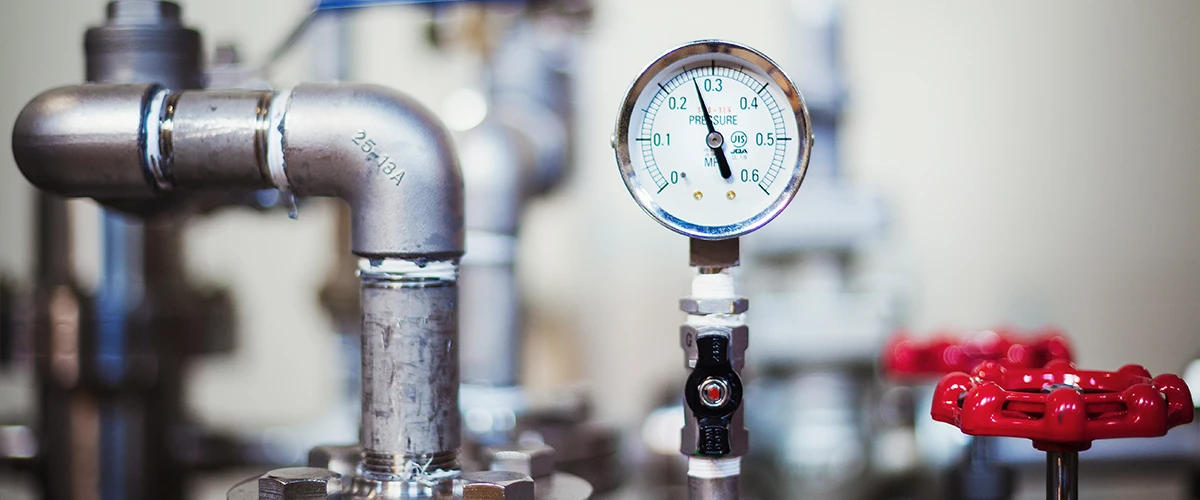
A pressure gauge on an outdoor spigot gives us a real number, not a guess. That number tells us if this is house-wide or localized.
We check the regulator
If pressure is low or inconsistent house-wide, we inspect the regulator first. A quick test before and after it tells us if it is working.
We inspect the meter & main line
If the water pressure is already low at the meter, then there may be an issue with your underground line.
We look at individual fixtures
If the problem is with a particular fixture, we check aerators, valves, and supply lines to solve your problem.
We check for leaks
If there is no proof of what is causing the water pressure to be low, then we run leak detection to find hidden leaks.
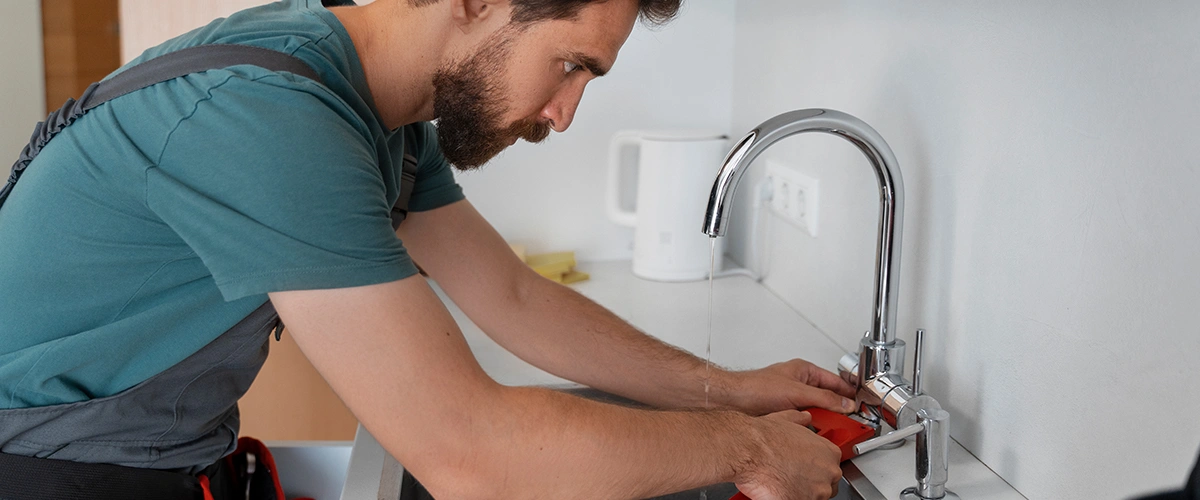
Fixing Low Water Pressure at the Kitchen Faucet
Low water pressure is one of the most common complaints we hear. Low water pressure at the kitchen faucet, with the rest of the house fine, usually traces back to one of these:
A clogged aerator
The small mesh screen at the tip of the faucet collects mineral deposits over time. Soaking it in vinegar and rinsing it out solves this more often than people expect.
A partially closed shutoff valve
The valve under the sink sometimes gets bumped or is not fully reopened after previous work.
A failing cartridge inside the faucet
Single-handle faucets use a cartridge that can wear out and restrict flow.
A kinked or damaged supply line
Flexible lines under the sink can develop kinks or internal damage over the years.
What Can You Check Before Calling a Plumber?
A few things are worth ruling out on your own first:
- Clean the aerator on the affected faucet
- Ask a neighbor if they are seeing the same drop in pressure
- Check that the main shutoff valve by your meter is fully open
- Confirm it is not just one fixture by checking a few different taps
If the problem clears up, you just saved yourself a service call. If it does not, you have already given your plumber for low water pressure useful information to work with.
When Is It Time to Call a Plumber for Low Water Pressure?
Some situations really do need a licensed low water pressure plumber, not a DIY attempt:
- You suspect a hidden leak
- Your home still has galvanized steel piping
- Pressure has dropped across the entire house
- Your water bill has jumped without an obvious reason
- You have already cleaned aerators and checked valves with no change
Regulator replacement and tank repairs involve working directly on your main water supply. A mistake there can turn into a much bigger mess.
Why Is Low Water Pressure Common in Orange County Homes?
Many neighborhoods around Costa Mesa and Newport Beach have housing that is several decades old. That means older piping and regulators past their expected lifespan. On top of that, Southern California’s hard water speeds up mineral buildup in pipes and fixtures. That combination is exactly why low water pressure is one of our most common calls. We serve high quality plumbing services in Aliso Viejo, Fountain Valley, Newport Coast, Tustin, Santa Ana, and throughout Orange County.
Final Thoughts
Low water pressure almost always comes down to one of a handful of causes. A proper diagnosis is what separates a real fix from a guess. If you need a reliable plumber for low water pressure, Parzival Plumbing is a family-owned, licensed plumbing company based in Costa Mesa. We serve Orange County 24/7, with a free second opinion on every estimate and a 100% satisfaction guarantee. Call 949-229-7550 or request service online, and we will find out exactly what is causing the issue with yours.
Frequently Asked Questions