Ever open the dishwasher and find your glasses covered in cloudy white spots? Or maybe you have scrubbed at a crusty ring around your faucet, and it just will not go away? That is hard water. It carries calcium and magnesium, and over months and years, those minerals build up inside your pipes, appliances, and fixtures. This is usually when people start looking into water softeners. A softener treats hard water through something called ion exchange. The idea itself is simple, but getting the water softener installation in Orange County actually matters, since a bad connection can leak, waste salt, or leave your water no softer than before. In this blog by Parzival Plumbing, we will walk through water softener system installation from start to finish, the mistakes to watch out for, and what upkeep looks like once everything is running.
What Does a Water Softener Actually Do?
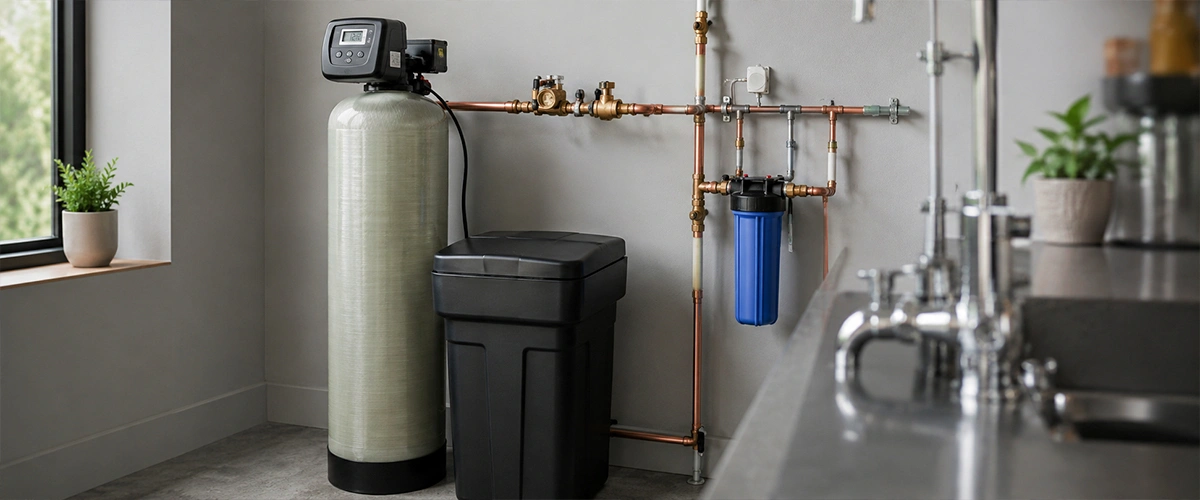
Inside the unit sits a tank full of resin beads carrying a negative charge. As hard water passes through, those beads grab onto the calcium and magnesium ions, which is the ion exchange part. Over time, the beads fill up and need to be reset, and that happens through a cycle called regeneration. Salty water from the brine tank washes the collected minerals out and rinses the resin so it is ready again. Worth knowing: softened water is not mineral free, it just picks up a small amount of sodium instead. It also will not remove bacteria or sediment. It has one job, and that job is hard.
Signs Your Home May Need a Water Softener
Hard water usually shows up in small, annoying ways long before anyone thinks to test for it. Maybe it is white crust around the showerhead, or glasses coming out of the dishwasher looking spotty even right after a wash. Soap not lathering the way it should is another clue, and some people notice their skin feels tight or filmy after a shower. Given enough time, scale builds up inside pipes and the water heater, slowly dragging down its efficiency. If you are not sure whether this is happening in your home, testing your water is really the only way to know. If you notice any of these signs, give Parzival Plumbing a call for expert water softener installation services.
What to Check Before Installing a Water Softener
A bit of prep saves a lot of trouble later in water softener system installation. Before you start, go through this list:
- How hard is your water, really? It affects what size system you need.
- How many people live in the home?
- How much water do you typically use?
- Is there room near the main line for the unit?
- Can you reach a drain for regeneration water?
- Does the control valve need power nearby?
- Are there local codes that affect the drain connection?
- Is there room for a bypass valve, so servicing later is not a headache?
Every brand does things a little differently, so it is worth reading the manufacturer’s manual for water softener system installation before you get started, rather than assuming it works like the last one you saw.
Tools & Materials Needed for Water Softener Installation
Most homes already have half this stuff sitting around. You will likely need:
- Adjustable wrench and a pipe cutter
- Tubing and fittings that match your existing pipes
- Shutoff and bypass valves
- Drain tubing plus a brine line
- Hose clamps and thread sealing tape
- A bucket, some towels, and a level
Where Should You Install a Water Softener?
Most people put their softener in a garage, basement, or utility room, somewhere close to the main water line. The water and drain access should be nearby. Keep the unit closer to the point where water enters the home. Additionally, this leads to fewer pipe runs and fittings. If you are unsure about home water softener installation in Mesa Verde, do not worry. We at Parzival Plumbing can walk you through every step.
How to Install a Water Softener: Step by Step
Step 1: Shut Off Water & Electrical Power
Turn off your main water supply first. If the unit has its own circuit, shut off that breaker too. If the wiring goes beyond plugging into an outlet, hand that part to a licensed electrician. It is not worth the risk otherwise.
Step 2: Drain the Plumbing Lines
Open a nearby faucet once the main is off. This lets trapped pressure out so you are not fighting spraying water while you work.
Step 3: Position & Level the Unit
Put the softener in its spot, then check it with a level. If it is even slightly off, fix that now, not once everything is connected and installed.
Step 4: Connect the Water Supply & Bypass Valve
Figure out which port on the control valve is the inlet and which is the outlet. This is also a good time to install the bypass valve. You will appreciate it the next time the unit needs service.
Step 5: Connect the Brine Tank & Drain Line
Run the brine line from the brine tank to the control valve, since this carries salty water in during regeneration. Then connect the drain tubing, following your local plumbing code.
Step 6: Connect Electrical Supply & Add Salt
If your setup needs any electrical work, just follow the manual for that part. Then fill the brine tank with the salt your model calls for.
Step 7: Program the Valve & Restore Water Supply
Set the time, your water hardness level, household size, and regeneration schedule. Then ease the main valve back open slowly. Rushing it can loosen the fittings you just installed.
Step 8: Check for Leaks & Run the First Cycle
Check every connection, inlet, outlet, brine line, and drain, and look closely for drips. Test your water hardness afterward to make sure it is doing its job.
Common Mistakes When Installing a Water Softener
A few mistakes come up often enough to call out. Installing a water softener backward, with the inlet and outlet flipped, is a common one. It means the system does nothing useful. A system that is too small for your household leaves your water only partly treated. A poor drain setup can cause backups during regeneration, and loose fittings tend to turn into slow leaks nobody catches right away. These slip ups happen a lot with DIY jobs, which is exactly why hiring a professional Orange County plumber for this work is usually the smarter move.
Water Softener Installation Cost
There is no single number here since it comes down to your specific setup. Water softener installation cost depends on:
- The type and size of system you choose
- How hard your water is
- Whether your plumbing needs changes
- Where the unit goes and what the drain situation looks like
- Any electrical work and local labor rates
- Whether it is for a residential or commercial property
DIY vs Professional Water Softener Installation
If you already have some plumbing experience and your setup is fairly simple, home water softener installation can be a reasonable way to cut down on labor costs. But once things get complicated tight spaces, tricky wiring, unusual layouts, bringing in a professional tends to pay off.
DIY Installation | Professional Installation |
Works for straightforward setups | Better for complex plumbing |
Needs basic plumbing knowledge | Brings professional expertise |
Good for easy to reach spots | Handles tight or unusual spaces |
When Should You Hire Water Softener Installation Services?
A few situations make hiring a pro the smarter call, whether it is residential or commercial water softener installation:
- New plumbing needs to be cut in or rerouted
- The installation spot is oddly shaped
- You do not have much plumbing experience
- You are installing a large capacity or whole house water treatment system
- It is a commercial property with code requirements to follow
Commercial Water Softener Installation
Businesses go through a lot more water than homes do, so commercial softeners need bigger capacity to keep up. That usually means larger equipment, bigger plumbing connections, and more frequent maintenance to handle the heavier demand. That is exactly why commercial water softener installation in Costa Mesa is best left to certified plumbers who can deliver top quality work.
Water Softener vs Whole House Water Treatment System
A softener has one job, stripping calcium and magnesium out of your water through ion exchange. A whole house water treatment system goes further and can handle other water quality concerns depending on the equipment installed. Testing your water first is the best way to figure out which one actually fits your home.
How to Maintain a Water Softener After Installation
Once it is running, upkeep is fairly simple:
- Check salt levels every few weeks
- Clean out the brine tank if residue builds up
- Watch for salt bridging, a hard crust that forms above the waterline
- Check connections now and then for slow leaks
- Test your water hardness occasionally
- Call in a professional when something feels off
Final Thoughts
Getting the installation right, with solid connections and a thorough leak check, is what decides whether your water softener installation holds up for years or starts causing headaches down the line. If plumbing changes, tricky connections, or just a second opinion sound useful, Parzival Plumbing is happy to help, whether it is for your home or your business. We also offer free second opinions on any plumbing estimates.
Frequently Asked Questions
Can I install a water softener myself?
If you have basic plumbing skills and a fairly simple setup, yes, plenty of homeowners do it themselves. If you have a complicated plumbing problem or drains that are difficult to reach, it is worth calling a professional plumbing company like Parzival Plumbing instead.
How much does installation cost?
The cost to install a water softener varies based on the system, size, your location, and how much plumbing work is needed. We give you our upfront pricing so there are no surprises at the end.
How long does the water softener installation take?
It normally takes just a few hours to set up in a simple way. If it’s tricky plumbing or a tight spot, it can take longer.
Should I hire a plumber for this?
If there is a lot of plumbing, electrical work, or a tricky drain situation involved, then it is worth paying for a professional team. They bring a level of confidence that is hard to match when doing it alone.
Does a water softener need electricity?
Most control valves run off a standard outlet, but some models work without power. Check the specs for your particular system to be sure.